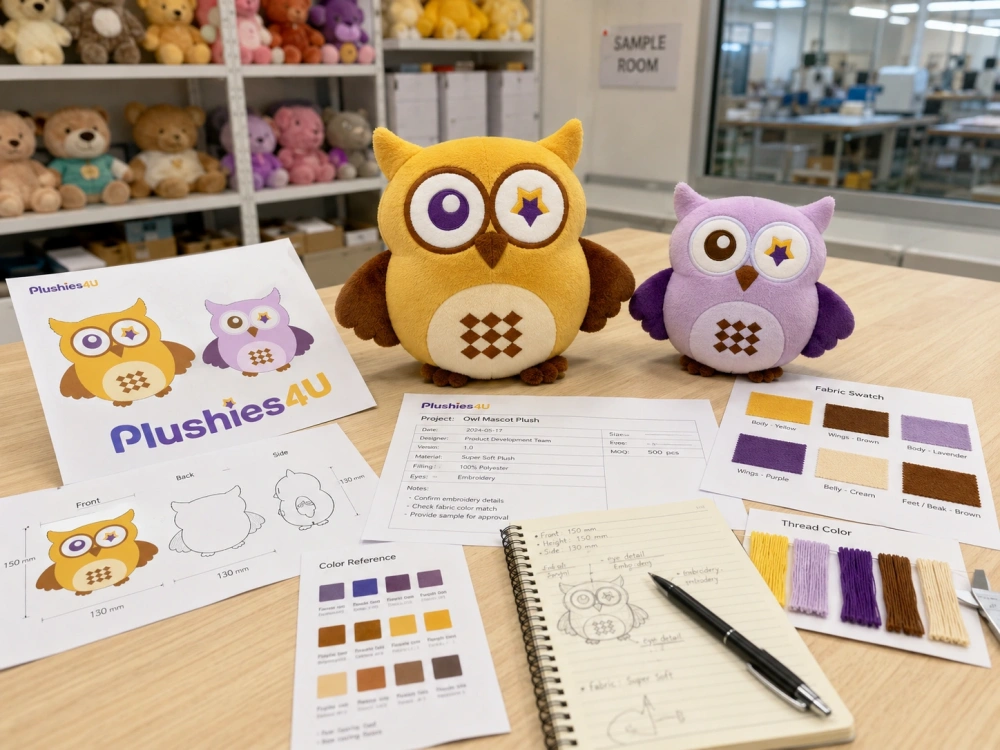
Ordering custom plush toys in bulk involves more than sending a character design to a factory and asking for a unit price. The buyer must define the product, target market, quantity, materials, packaging, testing requirements and delivery terms before the manufacturer can prepare an accurate quotation.
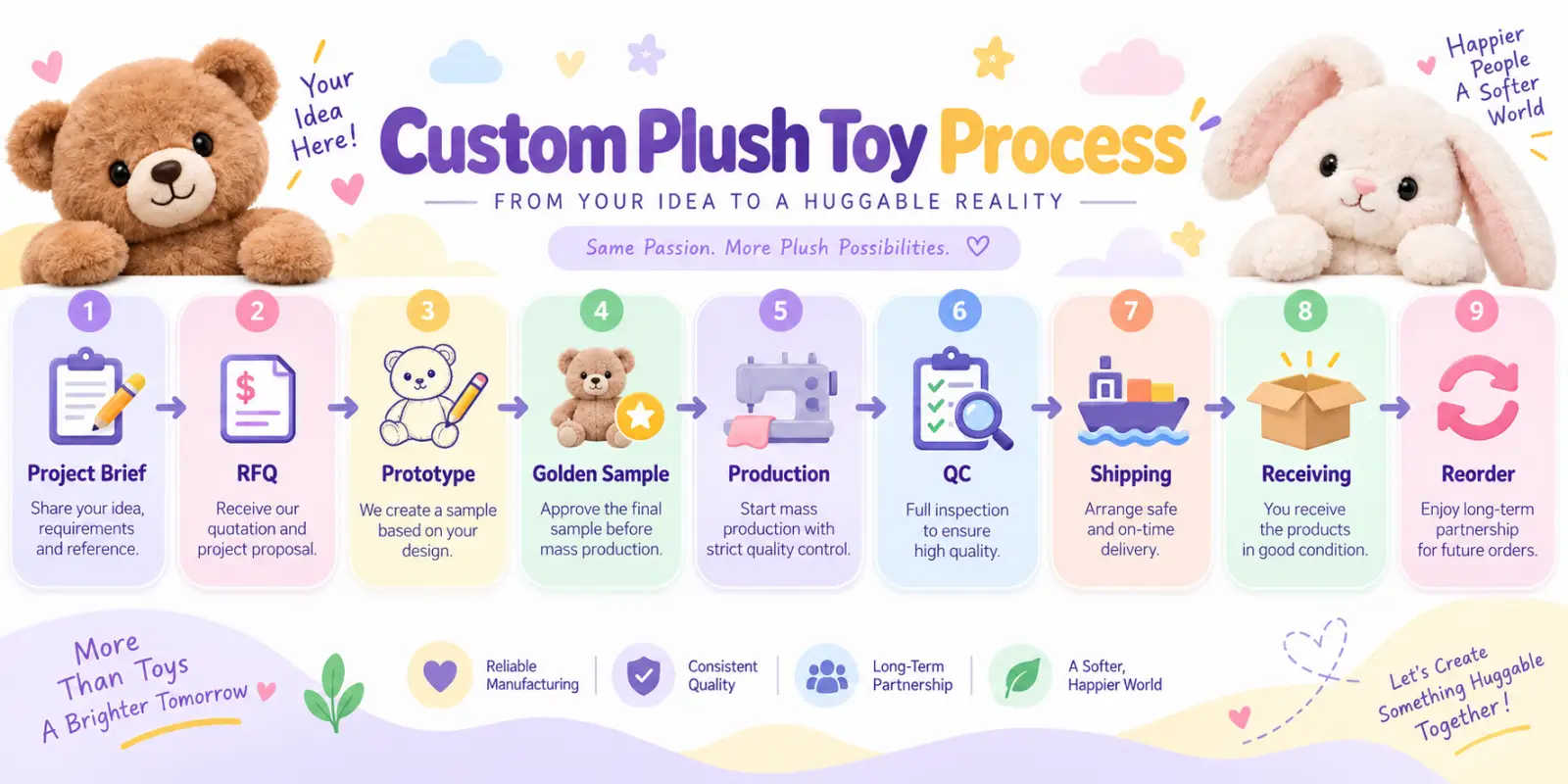
The safest purchasing process uses clear approval gates:
| Stage | Buyer decision | Required approval |
|---|---|---|
| Project definition | Product, audience and target market | Written project brief |
| RFQ and quotation | Specifications, quantity and commercial terms | Comparable quotation |
| Prototype development | Shape, materials and construction | Sample feedback |
| Pre-production approval | Final appearance and specification | Golden sample approval |
| Bulk production | Quantity and production version | Production release |
| Quality control | Inspection criteria and acceptable defects | Inspection report |
| Shipping | Freight method and Incoterm | Shipping documents |
| Receiving | Quantity, cartons and product condition | Receiving report |
| Reorder | Approved files and version history | Reorder specification |
1. Define the Product and Its Intended Market
Begin with the commercial purpose of the plush toy. A promotional giveaway, licensed character, retail collectible and baby product may look similar, but they create different requirements for materials, packaging, testing and production control.
Confirm the following before requesting a quotation:
- Intended customer and age group
- Country or region where the product will be sold
- Retail, promotional, collectible or educational use
- Required product size
- Initial order quantity
- Number of designs, sizes and colorways
- Desired fabric and filling
- Embroidery, printing, clothing or accessories
- Brand labels, hangtags and retail packaging
- Required delivery destination and arrival date
- Applicable product testing or certification requirements
The intended age group should be decided early. Features such as buttons, plastic eyes, batteries, cords and detachable accessories may affect the construction and test plan.
Choose Between OEM and ODM
An OEM project is appropriate when the buyer already has a developed character, artwork and product specifications. The manufacturer converts those requirements into a producible plush toy.
An ODM project requires more development support. The buyer may begin with a concept, reference image or rough sketch, while the manufacturer provides suggestions on shape, structure, materials and production feasibility.
The distinction affects development work, quotation accuracy and the number of sample revisions likely to be required.
2. Prepare a Complete RFQ
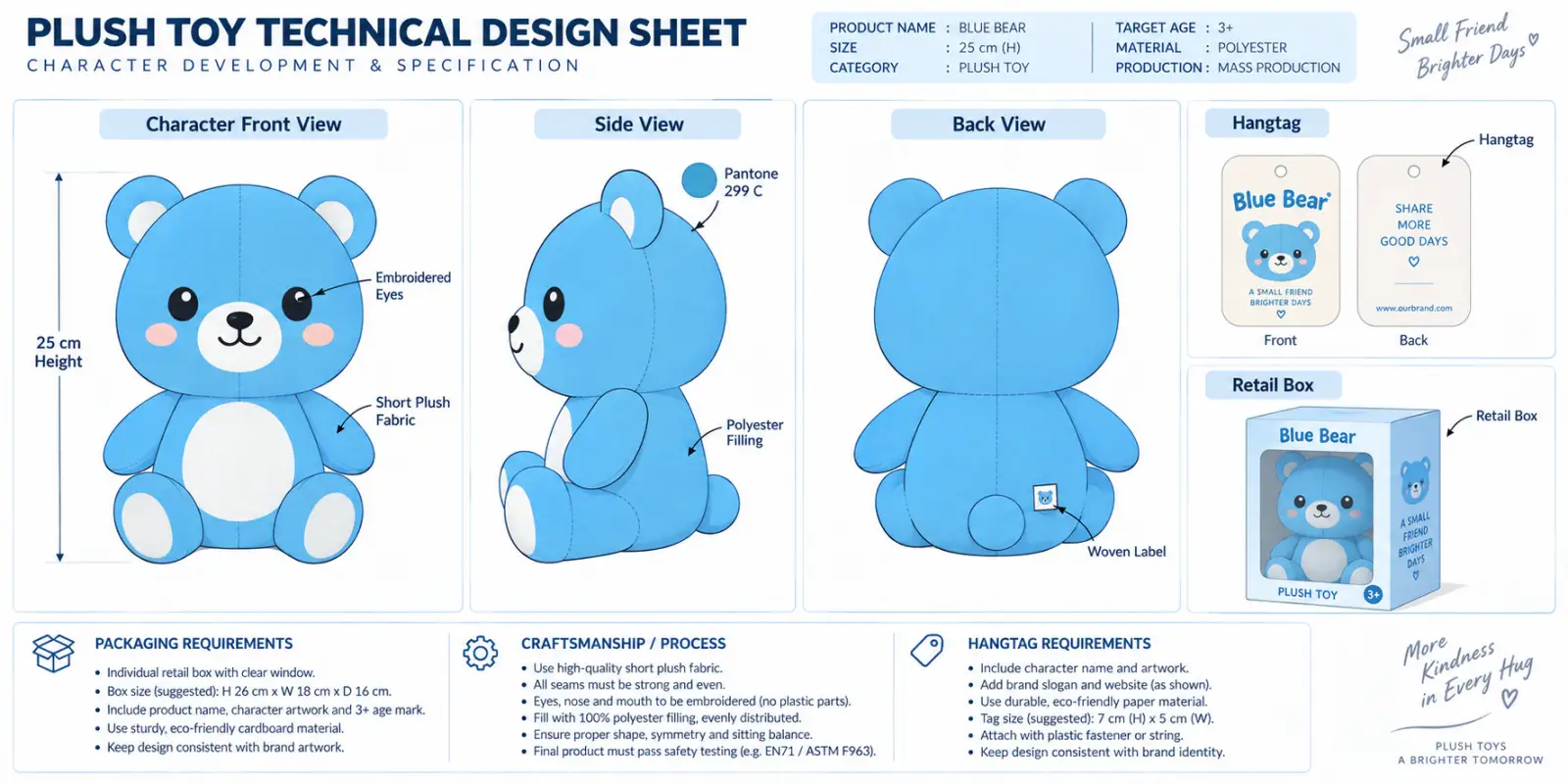
A vague inquiry such as “How much for 1,000 custom plush toys?” rarely produces a useful quotation. Size, materials, construction, packaging and testing can all change the price.
A practical request for quotation should include:
| RFQ item | Information to provide |
|---|---|
| Design files | Front, side and back views when possible |
| Reference details | Pantone colors, logos, facial features and clothing |
| Finished size | Height, width and relevant proportions |
| Quantity | Total quantity and allocation by design or color |
| Target market | Countries where the product will be sold |
| Intended age | Age grade or intended user group |
| Materials | Preferred fabric, filling and accessories |
| Decoration | Embroidery, printing, appliqué or labels |
| Packaging | Polybag, hangtag, retail box or other format |
| Compliance | Required tests, reports, markings or documentation |
| Delivery | Destination, target arrival date and shipping preference |
| Commercial information | Target price when available |
If only a character illustration is available, identify which details are essential and which may be adjusted for production. Very thin limbs, complex gradients, tiny accessories and intricate clothing often need to be simplified to create a durable, repeatable product.
3. Compare Quotations on the Same Scope
A low unit price does not necessarily mean a lower total purchasing cost. One supplier may include packaging and final inspection, while another may quote only the unpackaged product.
Ask each supplier to state what the quotation includes:
- Unit price
- Sample or prototype fee
- Pattern or development charges
- Quantity and SKU allocation
- Fabric, filling and accessories
- Embroidery or printing
- Labels and hangtags
- Individual and retail packaging
- Testing and laboratory charges
- Export cartons
- Freight or delivery charges
- Applicable Incoterm
- Payment schedule
- Quotation validity
- Charges for sample revisions
- Cost consequences of specification changes
Understand How the MOQ Is Applied
MOQ may be affected by fabric sourcing, embroidery setup, printing, accessories, packaging and production efficiency. It may also be calculated per design, size or colorway rather than across the entire purchase order.
For example, an order described as “1,000 pieces” may contain five different characters. The factory may treat that as five production runs of 200 pieces rather than one 1,000-piece run.
Plushies4u focuses on commercial production projects with an MOQ starting from 500 pieces. Buyers should still confirm whether the applicable MOQ is calculated per design, color or specification.
Compare Landed Cost, Not Only Unit Price
The purchasing budget may include:
- Product cost
- Sample development
- Packaging
- Laboratory testing
- Inspection
- Freight
- Cargo insurance
- Import duties
- Taxes
- Customs clearance
- Destination delivery
A comparable quote should use the same product specification, quantity, packaging and delivery term. Otherwise, apparent price differences may come from different scopes rather than manufacturing efficiency.
4. Develop the Prototype
The prototype converts drawings and written requirements into a physical product. This is where proportions, materials, construction and manufacturability become visible.
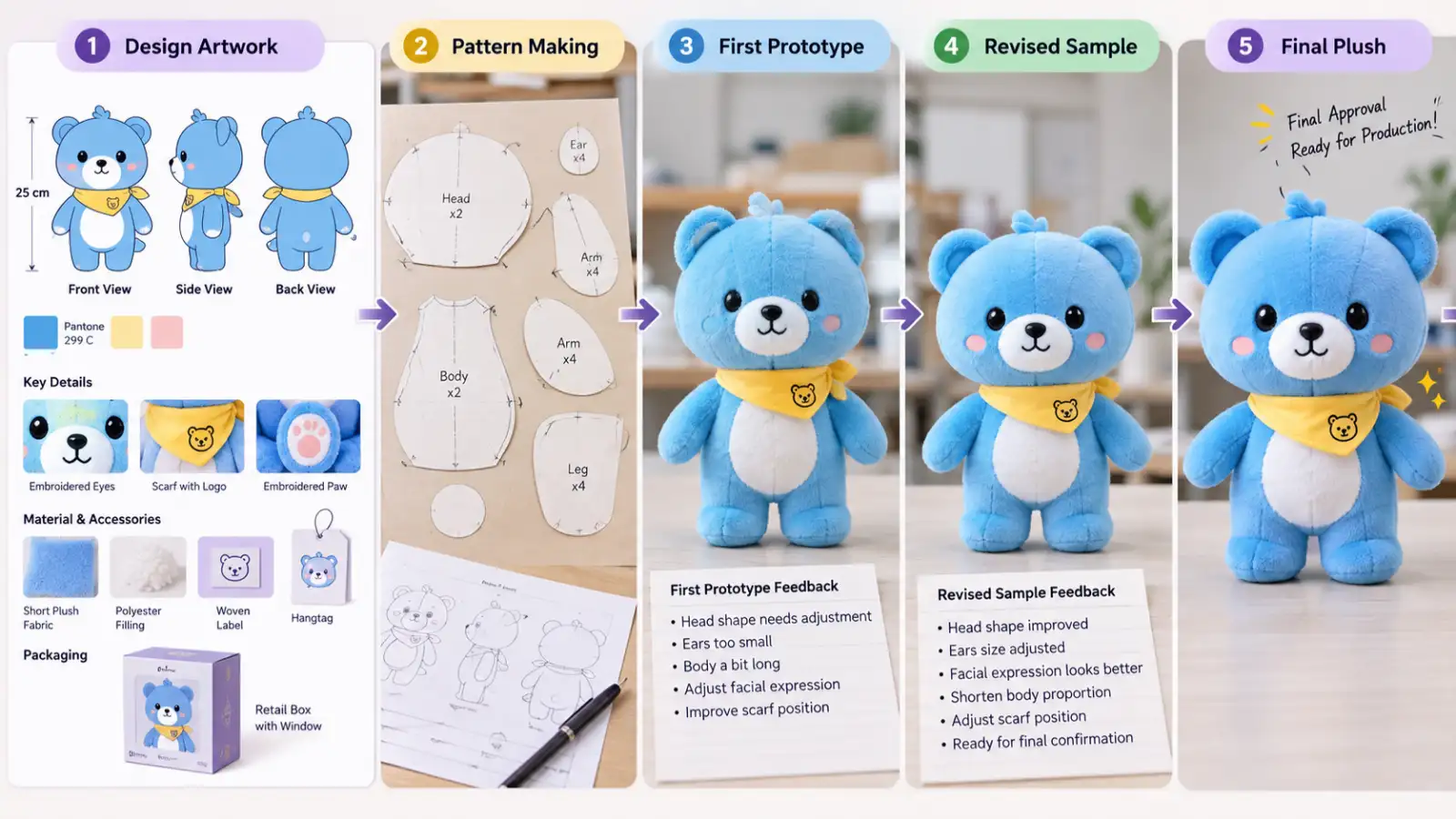
A useful sample-development cycle normally includes:
- The manufacturer reviews the artwork and specifications.
- Patterns and construction methods are developed.
- Fabrics, filling and accessories are selected.
- A physical prototype is produced.
- The buyer reviews the sample and submits consolidated feedback.
- The manufacturer makes agreed revisions.
- The final pre-production sample is approved in writing.
A digital mock-up can help confirm artwork placement and general direction, but it cannot replace a physical sample. Fabric texture, stuffing density, balance, seam placement and the three-dimensional shape must be assessed on the actual product.
Consolidate Sample Feedback
Avoid sending separate instructions from multiple departments. Nominate one decision owner and combine comments into a single revision document.
Useful feedback is measurable:
- “Reduce the head width by 8 mm.”
- “Move the embroidered logo 5 mm upward.”
- “Match the blue fabric to Pantone 299 C.”
- “Increase the filling around the neck.”
- “Replace the plastic eye with embroidery.”
Comments such as “make it cuter” or “the shape feels wrong” leave too much room for interpretation.
5. Approve a Golden Sample Before Bulk Production
The approved pre-production sample, sometimes called a PPS or golden sample, should become the physical reference for mass production.
Do not approve it based only on photographs when physical review is practical.
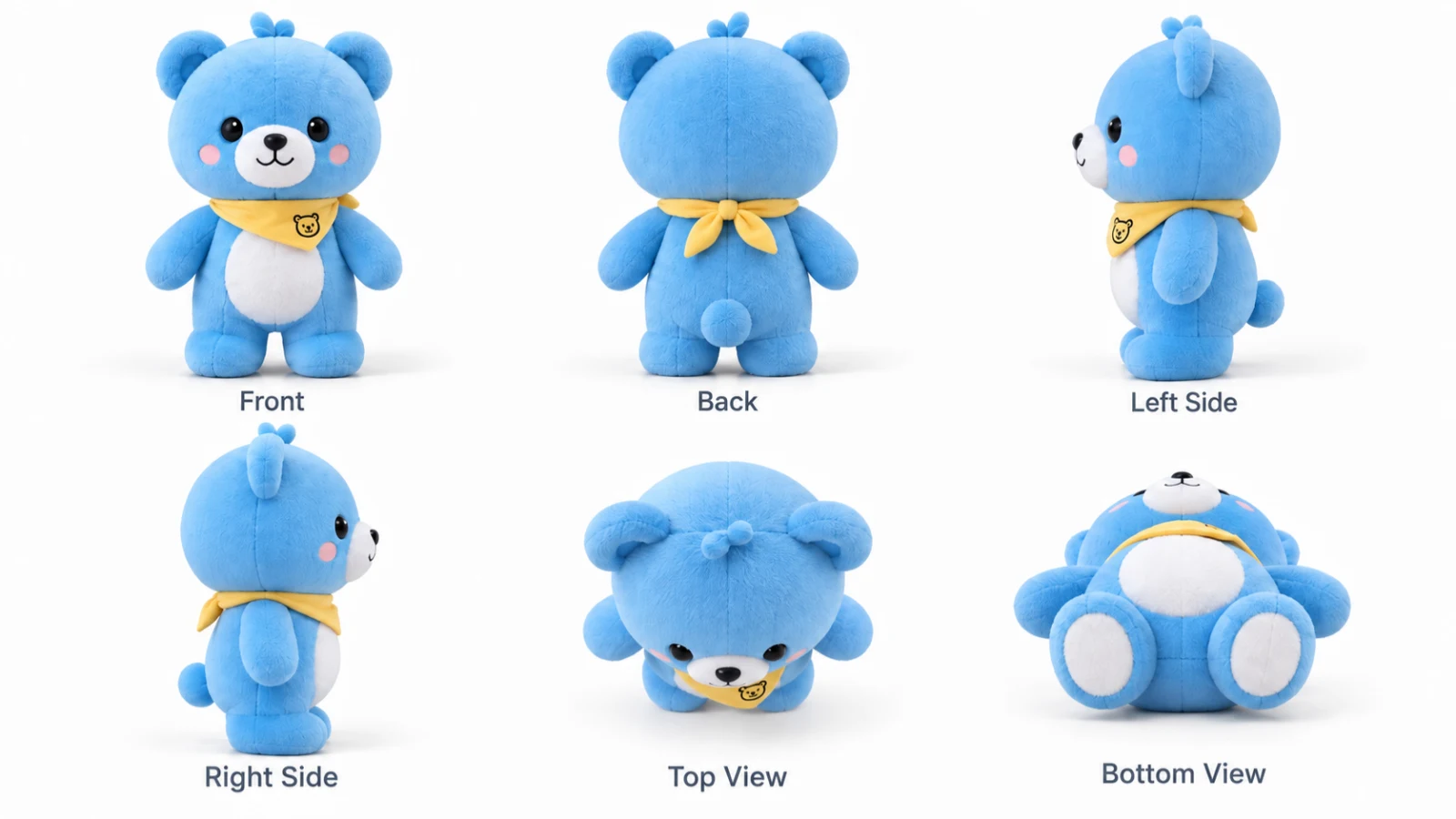
Sample Approval Checklist
Check and record:
- Overall silhouette and proportions
- Finished dimensions
- Character expression
- Fabric type and texture
- Color under consistent lighting
- Embroidery size, position and thread color
- Printed details
- Seams and stitching
- Stuffing density
- Stability and balance
- Clothing and accessory attachment
- Labels, warnings and tracking information
- Hangtags and packaging
- Barcode accuracy
- Carton markings
- Applicable safety construction
- Differences from the quotation or specification
Photograph the approved sample from the front, back, sides, top and bottom. Keep the signed specification, approved artwork and dated revision record together.
A written approval should state the approved version and list any remaining changes. Informal approval through scattered messages creates avoidable disputes when production begins.
6. Confirm the Compliance Plan
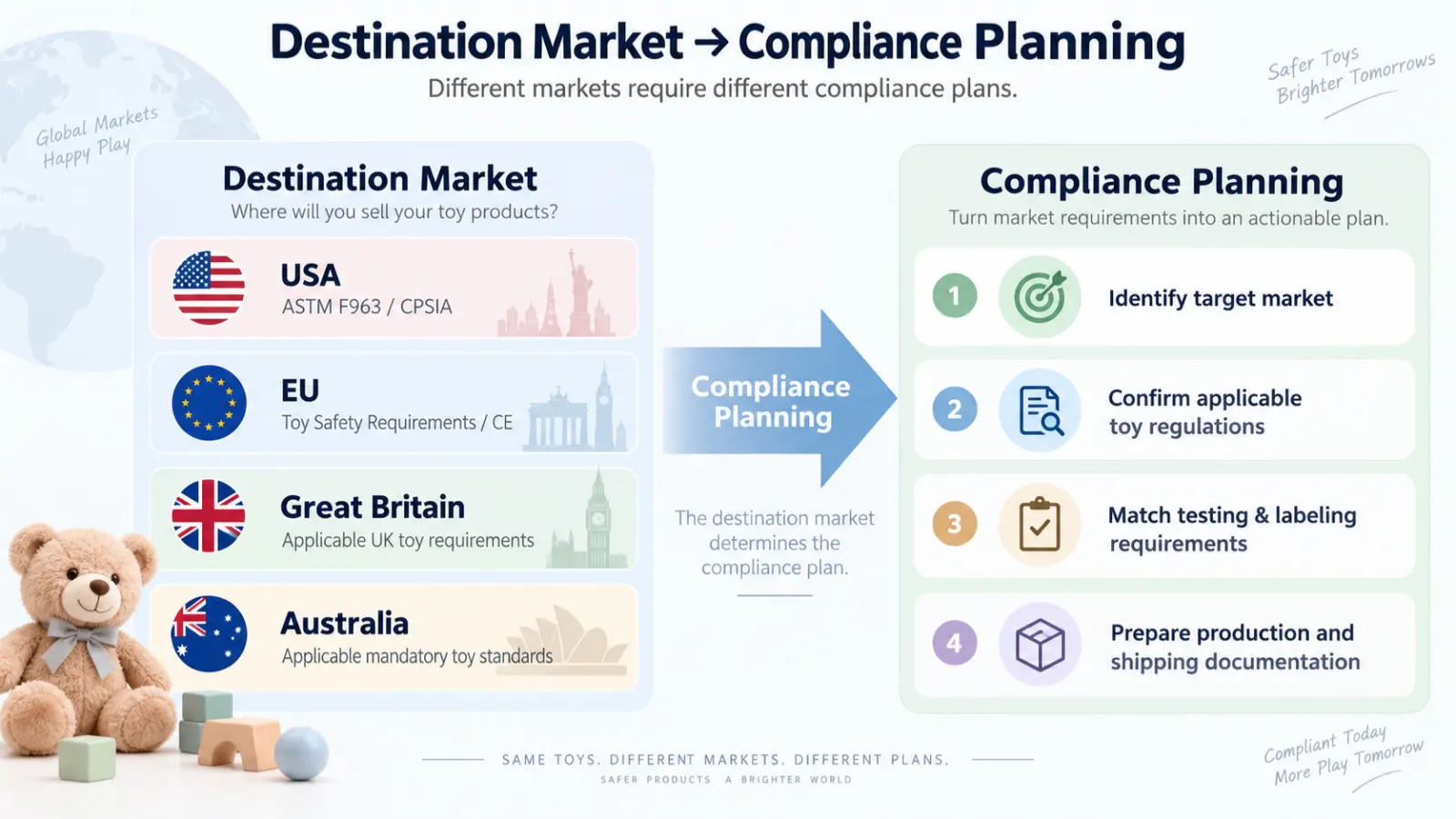
The compliance plan should be defined by the destination market, product classification, intended age and product features. A past test report for a different plush toy is not proof that a new design complies.
United States
Children’s toys are subject to the applicable provisions of ASTM F963 and other requirements enforced by the Consumer Product Safety Commission. Toys primarily intended for children aged 12 or younger generally require testing by a CPSC-accepted third-party laboratory and certification through a Children’s Product Certificate. The domestic manufacturer or importer is responsible for identifying the applicable requirements. The CPSC also identifies a specific seam-performance requirement for stuffed and beanbag-type toys in ASTM F963. CPSC Toy Safety Business Guidance
European Union
Toys placed on the EU market must meet the applicable safety requirements and carry CE marking. Compliance work may involve mechanical and physical properties, flammability, chemical requirements, technical documentation and an EU Declaration of Conformity. European Commission toy-safety guidance
As of September 2026, the EU Toy Safety Regulation 2025/2509 has entered into force but will begin applying after its transition period on August 1, 2030. Buyers should plan projects against the requirements in force when the product will be placed on the market.
Great Britain
Toys supplied in Great Britain are governed by the Toys (Safety) Regulations 2011. Current guidance allows qualifying products to use CE or UKCA marking, subject to the applicable conformity process and documentation. UK toy-safety guidance
Australia
Australia has specific mandatory standards for certain toy categories. Its standard for toys intended for children up to and including 36 months explicitly includes stuffed and plush animals and addresses risks such as detachable small parts. ACCC mandatory toy standard
Testing requirements may change when a plush toy includes:
- Plastic eyes or noses
- Batteries or sound modules
- Magnets
- Long cords or straps
- PVC components
- Printed coatings
- Detachable accessories
- Products intended for babies or toddlers
Agree on the test plan before finalizing materials and packaging. If testing begins only after bulk production, a failed result may require costly rework or complete replacement.
7. Lock the Production Specification
Before releasing the purchase order for production, create one controlled specification containing:
- Approved artwork and revision number
- Finished dimensions and tolerances
- Fabric names, colors and suppliers where relevant
- Filling type and target firmness
- Embroidery and print files
- Stitching and construction details
- Accessories and attachment methods
- Sewn-in labels and tracking information
- Hangtags and packaging artwork
- Barcode data
- Testing plan
- Quantity per SKU
- Packing method
- Export-carton requirements
Any change after approval should be recorded in writing. A substitution that appears minor—such as a different fabric weight, eye component or packaging film—can affect appearance, cost, testing and delivery.
8. Release Bulk Production Only After Closing the Approval Gates
Production should begin only after the buyer has approved:
- Final physical sample
- Product specification
- Materials and colors
- Packaging artwork
- Label content
- Quantity breakdown
- Compliance and testing plan
- Commercial terms
- Shipping terms
- Production schedule
Request a stage-based schedule rather than a single promise such as “delivery in 45 days.” A useful project schedule separates:
- Artwork and technical review
- Prototype development
- Sample shipping and buyer review
- Revision work
- Final sample approval
- Material preparation
- Bulk production
- Testing
- Final inspection
- Packing
- Freight booking
- International transportation
Work backward from the required arrival date. The factory completion date is not the same as the date the goods reach the warehouse.
9. Establish Quality-Control Checkpoints
Final inspection alone may discover a problem too late. A stronger quality plan includes checks at several stages.
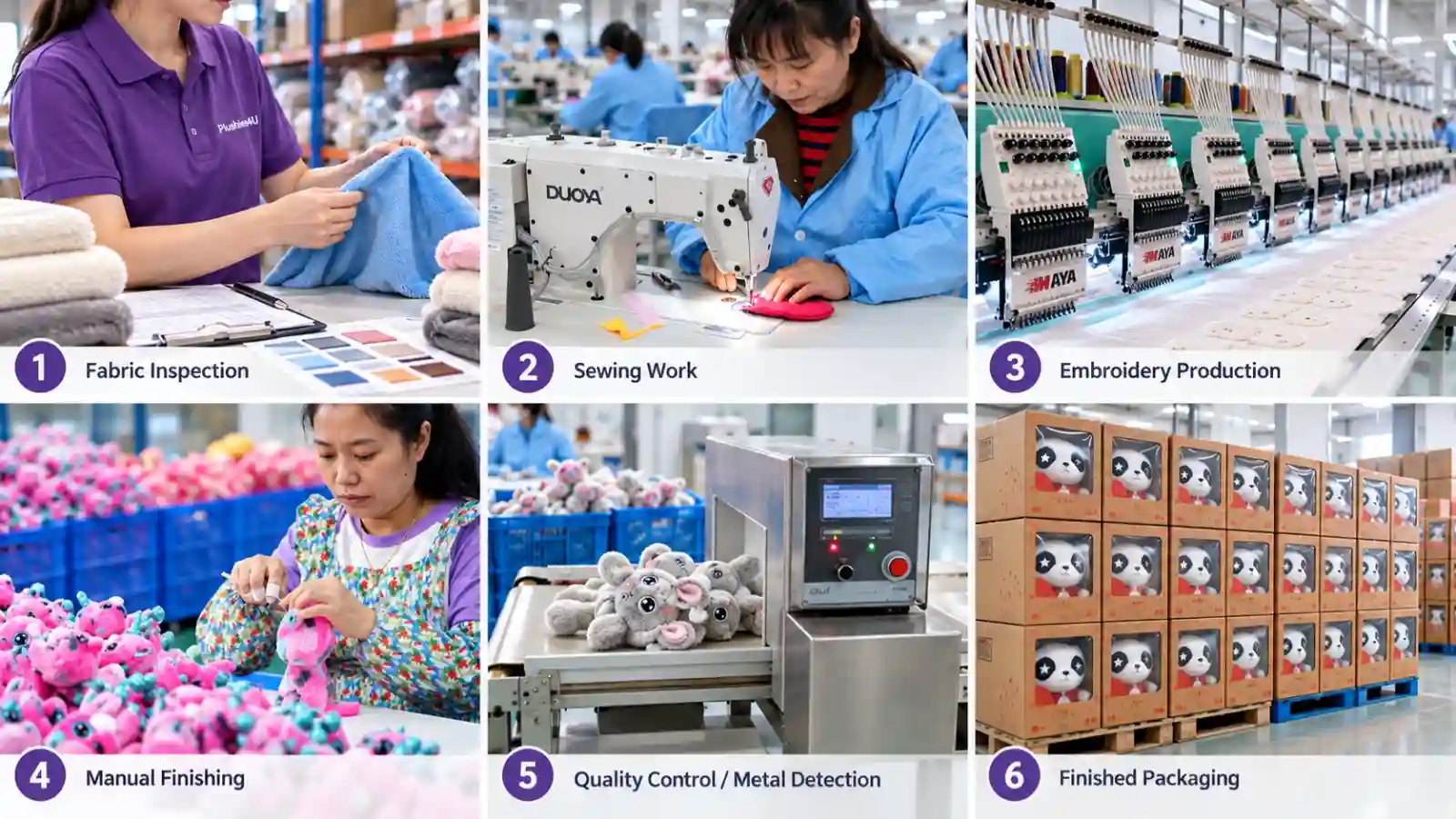
Incoming Material Inspection
Confirm:
- Fabric quality and color consistency
- Filling material
- Accessories
- Printed and embroidered components
- Labels and packaging materials
In-Process Inspection
Monitor:
- Cutting accuracy
- Sewing and seam construction
- Embroidery placement
- Product shape
- Stuffing consistency
- Assembly
- Attachment strength
- Workmanship against the approved sample
Final Product Inspection
Check:
- Appearance and cleanliness
- Finished dimensions
- Color and materials
- Stitching and open seams
- Embroidery and printing
- Accessories
- Labels and warnings
- Packaging condition
- SKU quantities
- Carton contents and markings
Agree in advance on the inspection method, sample size, defect categories and response to failed inspection. State whether the buyer will use the factory’s inspection team, a third-party inspection company or both.
At Plushies4u, quality control covers incoming materials, production monitoring and final inspection. The approved sample is used as the reference for appearance, materials, colors, dimensions and design details during bulk production.
10. Confirm Packaging Before Production Finishes
Packaging must protect the product, support compliance and fit the sales channel.
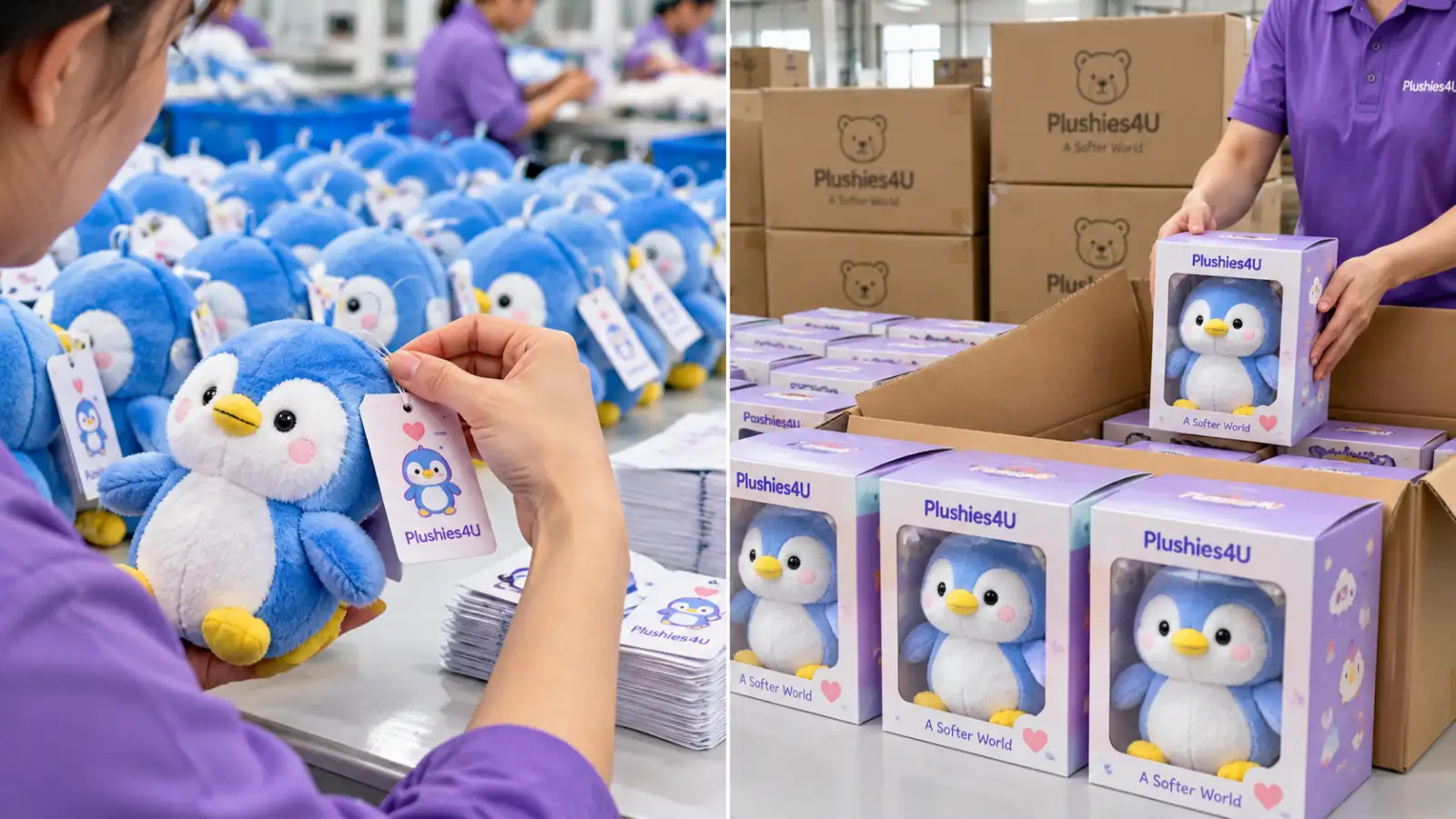
Options may include:
- Individual polybags
- Recycled-material bags
- Hangtags
- Header cards
- Display boxes
- Retail cartons
- Gift packaging
- Master export cartons
Confirm whether the package needs barcodes, warnings, importer information, recycling marks, product instructions or market-specific labeling.
For e-commerce projects, ask for packed product dimensions and weight. These affect fulfillment charges and shipping costs. For retail projects, approve the final pack presentation, barcode position and shelf-display requirements.
Plushies4u supports individual packaging, retail packaging, customized boxes, labels and hangtags. FSC-certified paper-based packaging options and GRS-certified recycled-material options can be discussed when relevant to the project.
11. Choose Shipping Terms and Freight Method
The quotation should name the Incoterm and the exact place or port. “FOB China” is incomplete because the named port matters.
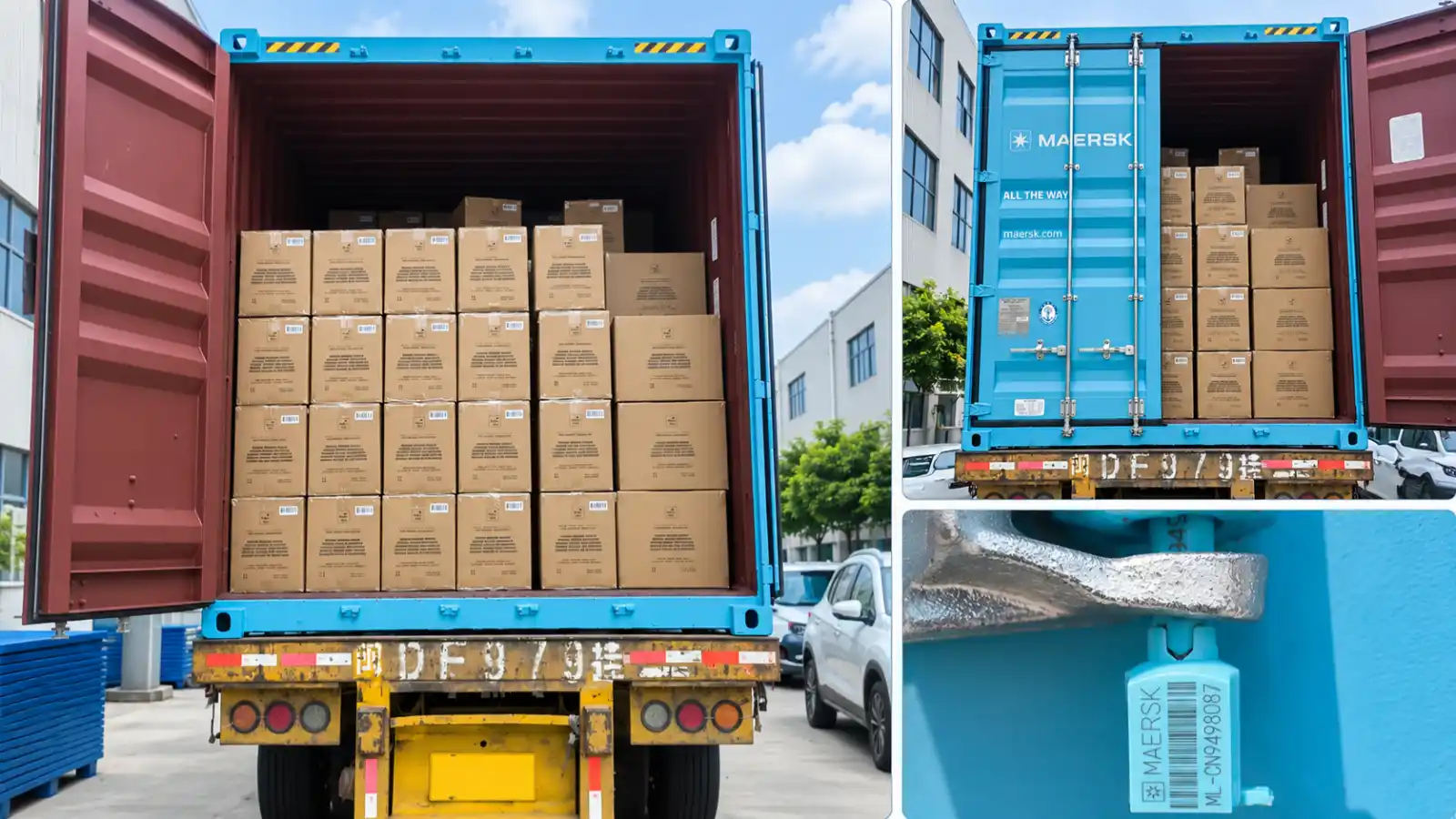
Common terms include:
| Term | Practical meaning for the buyer |
|---|---|
| FCA | Seller delivers the goods to the carrier at the named place; often considered for containerized shipments |
| FOB | Seller places the goods on board the vessel at the named port; buyer controls main freight and onward movement |
| DAP | Seller delivers to the named destination; buyer normally handles import clearance, duties and unloading |
| DDP | Seller accepts responsibility through import clearance and delivery at the named place, subject to local tax and importer requirements |
The ICC’s official Incoterms checklist notes that DAP leaves import formalities and duties with the buyer, while DDP places those responsibilities on the seller. It also distinguishes FOB from delivery arrangements that may be more appropriate for containerized cargo. ICC Incoterms 2020 checklist
The best term depends on the buyer’s freight capability, importer setup, destination and need for cost visibility. Confirm the term with a qualified freight forwarder rather than selecting it from price alone.
Air, Sea or Express Freight
- Express shipment suits prototypes, urgent samples and small shipments.
- Air freight reduces transit time but usually costs more.
- Sea freight is commonly considered for larger orders with sufficient planning time.
- Combined transport may be useful when part of the order is needed for an event or launch.
Ask the supplier for:
- Carton quantity
- Carton dimensions
- Gross and net weight
- Total shipment volume
- Port or airport of departure
- Estimated cargo-ready date
- Packing list
- Commercial invoice
- Product and compliance documents
- Shipment reference information
12. Inspect the Goods After Arrival
Receiving inspection closes the purchase cycle and creates evidence for corrective action.
Check:
- Carton count and visible shipping damage
- SKU and quantity against the packing list
- Product appearance against the approved sample
- Labels, barcodes and packaging
- A sample of products from different cartons
- Recurring or isolated defects
- Records of photographs, quantities and carton numbers
If a problem is found, separate affected stock and document it before repacking or distributing the products. Provide the supplier with clear evidence, including defect type, quantity, photographs and carton identification.
13. Preserve the Reorder Record
A repeat order should not rely on memory or an old email thread. Keep a controlled product record containing:
- Approved sample
- Pattern or construction reference
- Bill of materials
- Fabric and color references
- Artwork files
- Packaging files
- Test reports
- Inspection criteria
- Purchase-order history
- Approved changes
- Current revision number
Before reordering, confirm whether any material, component, standard, packaging requirement or destination-market rule has changed. Even when the design is unchanged, unavailable fabric or a revised compliance requirement may affect the next production run.
Bulk Custom Plush Order Checklist
Before issuing the purchase order, confirm that you can answer “yes” to each item:
- The intended user, age group and destination market are defined.
- The factory has complete artwork and product specifications.
- Quantity is allocated by design, size and color.
- The MOQ basis is understood.
- All quotations are based on the same scope.
- Sample fees and revision terms are documented.
- A physical pre-production sample will be approved.
- The compliance and testing plan is agreed.
- Labels and packaging artwork are approved.
- Quality checkpoints and defect handling are documented.
- The Incoterm includes a named place or port.
- The schedule distinguishes factory completion from final arrival.
- Final inspection requirements are written into the order.
- Approved files and samples will be preserved for reorders.
Common Questions About Ordering Custom Plush Toys in Bulk
What is the MOQ for custom plush toys?
MOQ depends on the factory, design, material, packaging and number of variants. Confirm whether it applies per purchase order, design, size or colorway. Plushies4u’s MOQ starts from 500 pieces for commercial production projects.
Can I order with only a sketch or reference image?
A sketch can be enough to begin an ODM discussion, but the manufacturer will need to convert it into a producible design. Additional views, dimensions, colors and detail references make the quotation and sample more accurate.
What determines the price of a custom plush toy?
The main variables include size, quantity, fabric, filling, construction complexity, embroidery, printing, clothing, accessories, packaging, testing and delivery terms.
How many sample revisions should I expect?
There is no reliable universal number. Clear artwork, measurable feedback and consolidated approvals reduce unnecessary revisions. Confirm the supplier’s revision policy before starting development.
How long does a bulk order take?
The schedule depends on artwork readiness, sample revisions, material sourcing, product complexity, testing, quantity, factory capacity and freight. Ask for a stage-by-stage timeline and plan from the required arrival date.
Can the bulk product differ from the approved sample?
Small production variation can occur, but the approved sample and written specification should define the acceptable result. Production controls and inspection should be designed to identify material differences before shipment.
Who is responsible for product compliance?
Responsibilities depend on the market and commercial structure. Brand owners, manufacturers and importers can all have obligations. The buyer should determine the applicable rules, required documents and responsible economic operator before production.
Start With a Production-Ready Project Brief
Plushies4u supports OEM and ODM custom plush projects from concept evaluation and sample development through bulk production, inspection, packaging and shipment coordination. The factory focuses on commercial orders starting from 500 pieces and supports projects for brands, retailers, distributors, promotional companies and IP owners.
To request a project review and quotation, prepare your artwork or references, desired size, quantity, destination market, packaging requirements, delivery location and target arrival date. Send the project requirements to Plushies4u so the team can assess manufacturability, sampling needs, compliance considerations and the appropriate production route.