How to Turn a Picture or Character Design Into a Custom Plush
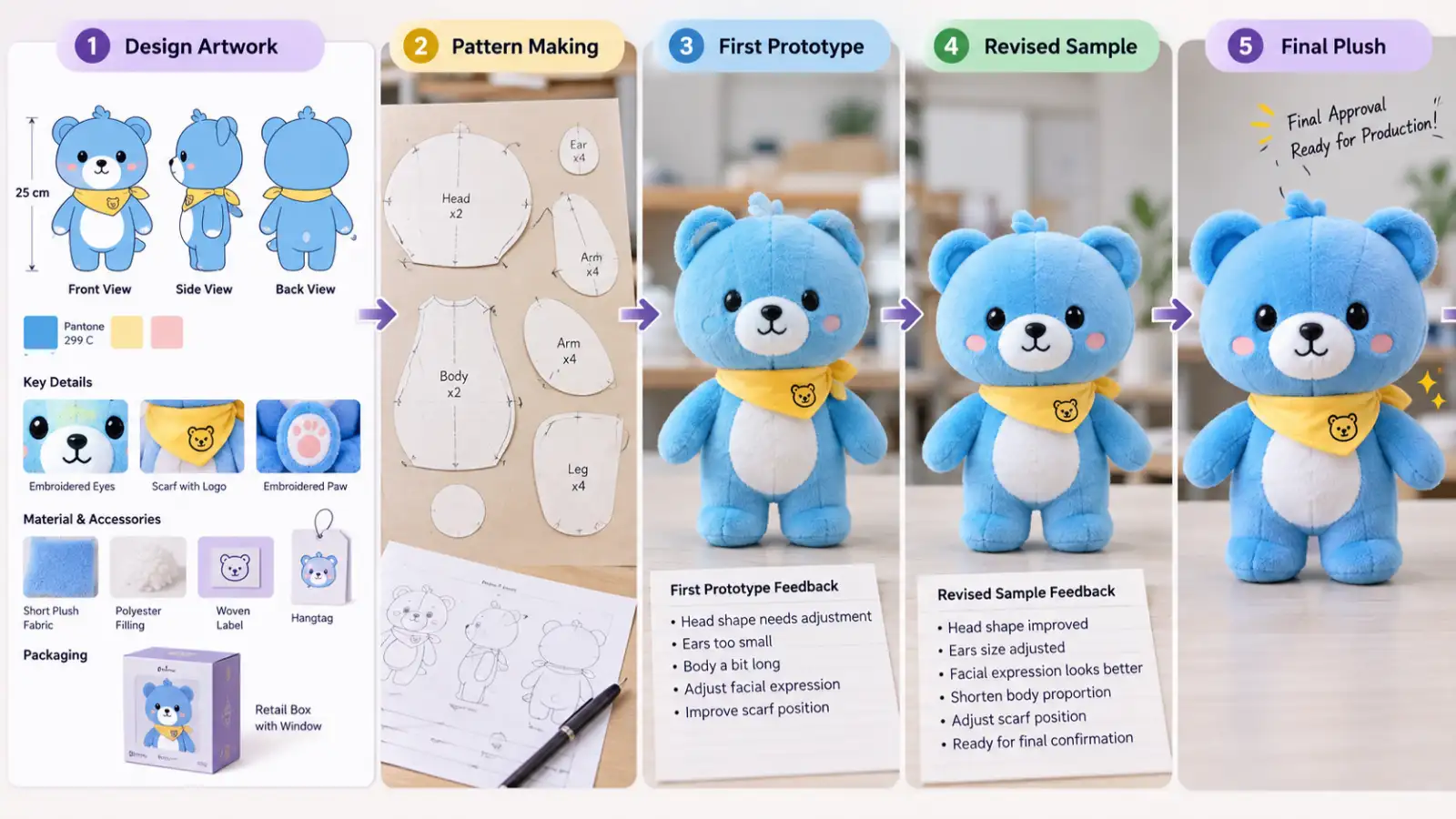
People searching “how are plushies made” often imagine that a drawing is copied directly onto fabric. Commercial custom plush development involves several engineering steps. A factory reviews the picture, decides how the unseen sides and three-dimensional shape should look, creates sewing patterns, selects materials, makes a physical prototype and revises it before bulk production.
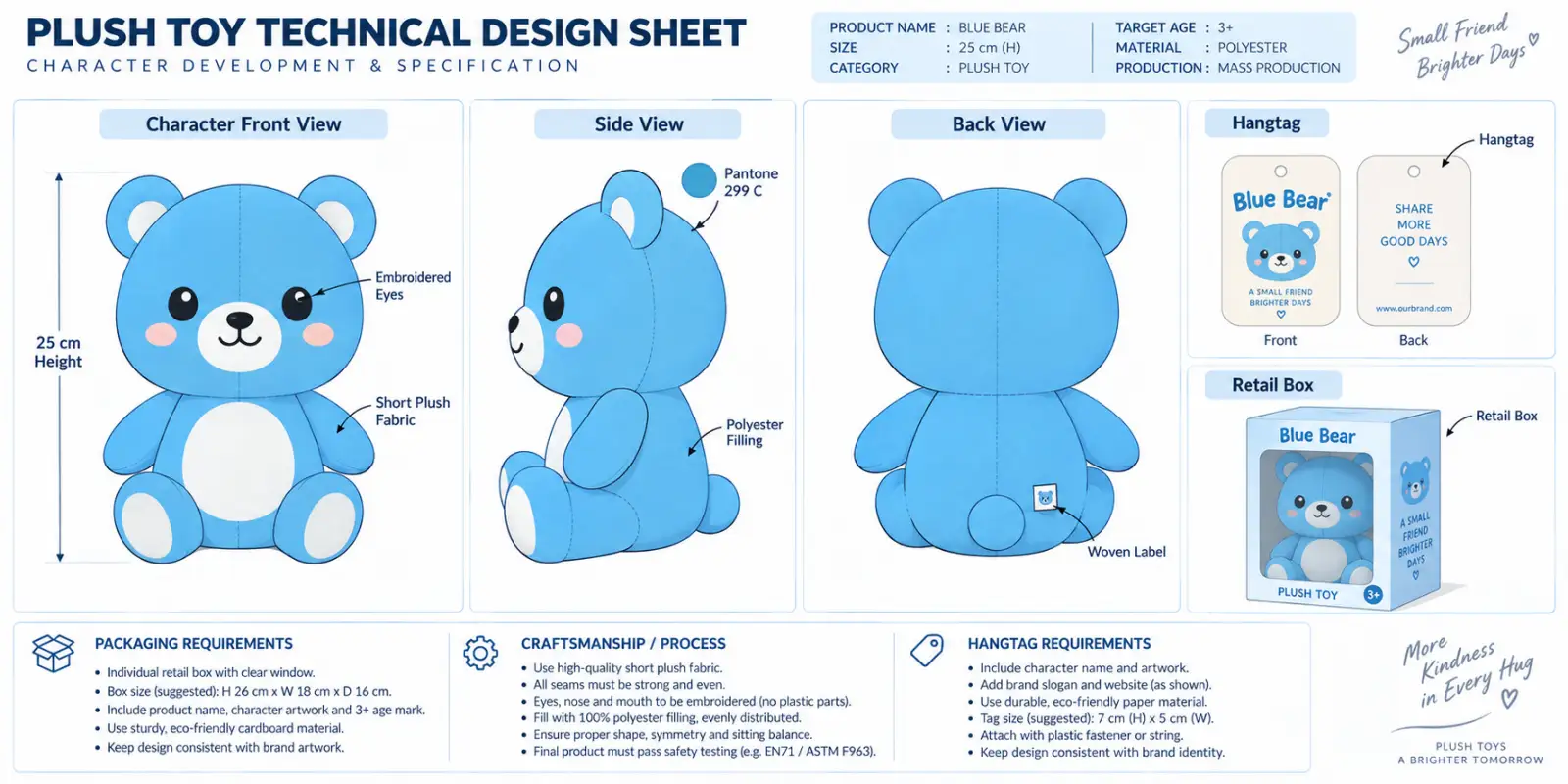
One clear picture can be enough to start the discussion. Front, side and back views, color references and written notes make the result more predictable.
| Development stage | What the factory does | What the buyer approves |
|---|---|---|
| Artwork review | Identifies shapes, proportions, colors and important details | The features that must remain recognizable |
| Product definition | Establishes size, posture, materials and intended use | Product format and commercial requirements |
| Pattern development | Converts the flat design into sewable fabric panels | Three-dimensional interpretation |
| Prototype | Produces the first physical plush | Shape, expression, materials and hand feel |
| Revision | Adjusts the pattern and product details | Corrected sample |
| Sample approval | Records the confirmed construction and specifications | Production reference |
| Bulk manufacturing | Cuts, decorates, sews, fills and assembles the order | Production quality |
| Inspection and packaging | Checks finished products and prepares them for delivery | Packaging and shipment requirements |
Can a Plush Toy Be Made From One Picture?
A factory can begin with one picture, but the image may leave important questions unanswered. A front-facing illustration rarely shows the character’s depth, back, tail attachment, side profile or intended posture.
When information is missing, the development team has to interpret it. That interpretation is then tested through the physical sample.
A single image works best when:
- The character has a simple, symmetrical shape
- The front view clearly shows its proportions
- The buyer accepts reasonable interpretation of hidden areas
- Exact licensed-character reproduction is not required
- A physical sample will be reviewed before production
More references are useful for characters with complex clothing, layered hair, wings, tails, equipment or asymmetrical features.
What Should You Send to the Manufacturer?
The quality of the starting information affects the speed and accuracy of sample development.
Essential Information
At minimum, provide:
- The clearest available character image
- Target plush size
- Estimated order quantity
- Intended use
- Destination market
- Required clothing or accessories
- Packaging expectations
Recommended Character Reference Pack
For a more controlled result, prepare:
| Information | Why it helps |
|---|---|
| Front view | Defines the face and main proportions |
| Side view | Shows body depth, nose projection and posture |
| Back view | Clarifies hair, clothing, markings and tail construction |
| Close-up details | Shows logos, expressions and small accessories |
| Color references | Reduces uncertainty when selecting fabric and thread |
| Target dimensions | Determines which details are practical |
| Material preference | Communicates the intended texture and product position |
| Must-keep features | Protects the character’s identity during simplification |
| Flexible features | Gives the pattern maker room to improve production feasibility |
| Intended age and market | Helps guide components, labeling and compliance planning |
| Quantity and packaging | Helps the factory plan commercial production |
Vector artwork is useful for logos and embroidery. High-resolution PNG, JPG or PDF references can also support product development. Pantone references or physical color samples are more precise than colors viewed only on a screen.
How a 2D Character Becomes a Three-Dimensional Plush
A flat illustration describes appearance. A plush toy also needs thickness, balance, seams, filling and a structure that can be sewn repeatedly.
The development team has to answer questions that may not appear in the picture:
- Is the head round, flat or oval from the side?
- Should the toy sit, stand, hang or lie down?
- How thick are the arms and legs?
- How does the hair connect to the head?
- Should clothing be part of the body or a separate garment?
- Which areas need filling?
- Where can seams be placed without changing the expression?
- How should the toy balance after filling?
- Which details need reinforcement?
The goal is to preserve the character’s identity while adapting it to soft textile construction.
Which Design Details Usually Need Adaptation?
Illustrations can contain shapes that are difficult to reproduce literally in fabric. The factory may recommend changes so the product can be sewn, filled and reproduced consistently.
| Artwork feature | Plush manufacturing challenge | Possible adaptation |
|---|---|---|
| Sharp corners | Filling naturally rounds the shape | Use shaped panels or a flatter fabric detail |
| Very thin arms or legs | Limited room for sewing and filling | Increase thickness slightly |
| Tiny fingers or toes | Small individual parts may be impractical | Combine them or represent them with embroidery |
| Floating hair strands | Unsupported pieces may bend or twist | Convert them into layered fabric panels |
| Fine outlines | Separate fabric pieces may be too narrow | Use embroidery or printing |
| Small text | Stitching may lose clarity | Enlarge it, simplify it or place it on a label |
| Gradients | Solid fabric cannot reproduce gradual color changes | Use suitable printing |
| Complex shadows | They may appear as unintended color blocks | Remove them or convert selected areas into appliqué |
| Oversized head | The sample may lean or fall | Adjust body proportions or internal structure |
| Detailed clothing | Multiple layers can become bulky | Simplify seams and combine selected pieces |
| Long accessories | They may bend or create attachment stress | Change the structure or add reinforcement |
Adaptation does not mean removing the character’s identity. It identifies which features create recognition and gives those features priority.
How Plush Patterns Are Developed
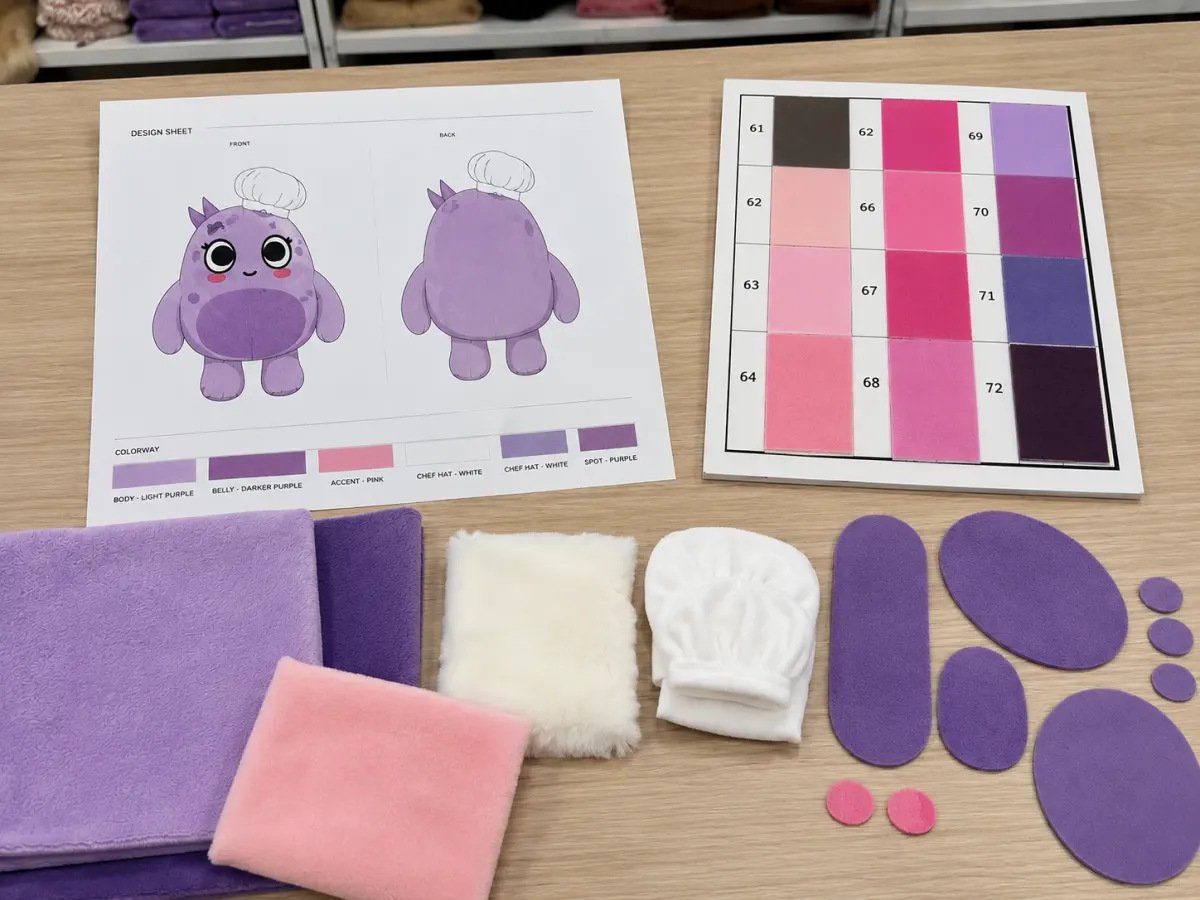
A sewing pattern divides the character into flat fabric panels. When the panels are joined and filled, they form the three-dimensional product.
A pattern maker determines:
- Panel shapes
- Seam positions
- Seam allowances
- Fabric pile direction
- Left and right symmetry
- Assembly sequence
- Filling openings
- Attachment points
- Internal support where required
The same front outline can produce several different plush shapes depending on how the side, back and connecting panels are constructed. Pattern development is therefore one of the main reasons a physical sample is necessary.
Choosing Fabric, Filling and Colors
The material has to support the intended appearance as well as the product structure.
Outer Fabric
Common options include minky, velboa, fleece, short plush and faux fur. Pile length affects how clearly seams and small decorative details remain visible.
Shorter-pile fabrics usually provide a cleaner surface for facial embroidery and small logos. Longer-pile fabrics create a fluffier appearance but can cover fine lines and make small shapes less distinct.
Filling
Filling affects softness, posture and shape retention. A pillow-shaped character may need a different filling level from a seated mascot or a small plush keychain.
The prototype should confirm:
- Head and body firmness
- Limb shape
- Sitting or standing balance
- Surface smoothness
- Overall hand feel
Color Matching
Fabric texture and pile direction affect how color appears under light. For character and brand projects, buyers should review actual material swatches or the physical sample rather than relying only on screen colors.
Embroidery, Printing or Appliqué?
Different parts of the picture may require different production methods.
| Method | Suitable details | Main consideration |
|---|---|---|
| Embroidery | Eyes, mouths, logos, text and facial lines | Stitch density, placement and fabric pile |
| Printing | Gradients, complex graphics and repeated patterns | Fabric compatibility and color appearance |
| Appliqué | Belly panels, paw pads, badges and color blocks | Additional cutting and sewing |
| Separate fabric component | Ears, hair, tails, wings and dimensional features | Attachment strength and shape |
| Woven or printed label | Brand information, care details and small text | Content, placement and target-market requirements |
| Clothing | Uniforms, jackets, dresses and character costumes | Bulk, fit and assembly time |
Facial details often deserve the most attention. Small changes to eye spacing, eyebrow angle or mouth position can change the character’s expression even when the rest of the product is correct.
How the First Plush Sample Is Made
Once the preliminary pattern and materials are ready, the sample team produces a physical prototype. The first sample tests the design interpretation and construction together.
The buyer should review:
- Overall silhouette and posture
- Head-to-body proportion
- Face and expression
- Finished dimensions
- Fabric texture and color
- Embroidery and print placement
- Clothing and accessories
- Filling level and hand feel
- Labels and branding
- Packaging fit
The first sample does not always need to be perfect. Its purpose is to expose the remaining decisions while changes are still manageable.
How to Give Useful Sample Revision Feedback
Effective feedback should identify the location, required change and intended result.
For example:
- “Move both eyes 3 mm lower” is clearer than “the face looks wrong.”
- “Reduce the head width while keeping its height” is clearer than “make the head smaller.”
- “Use shorter-pile fabric around the embroidered mouth” is clearer than “improve the mouth.”
- “Rotate the tail upward so it remains visible from the front” is clearer than “fix the tail.”
Marked-up photographs can show exactly where a change is needed. A consolidated revision document also reduces the risk of instructions being scattered across several messages.
Changes to shape usually require pattern adjustments. Changes to embroidery, color or accessory placement may require updates to the corresponding production files and specifications.
What Is an Approved or Golden Sample?
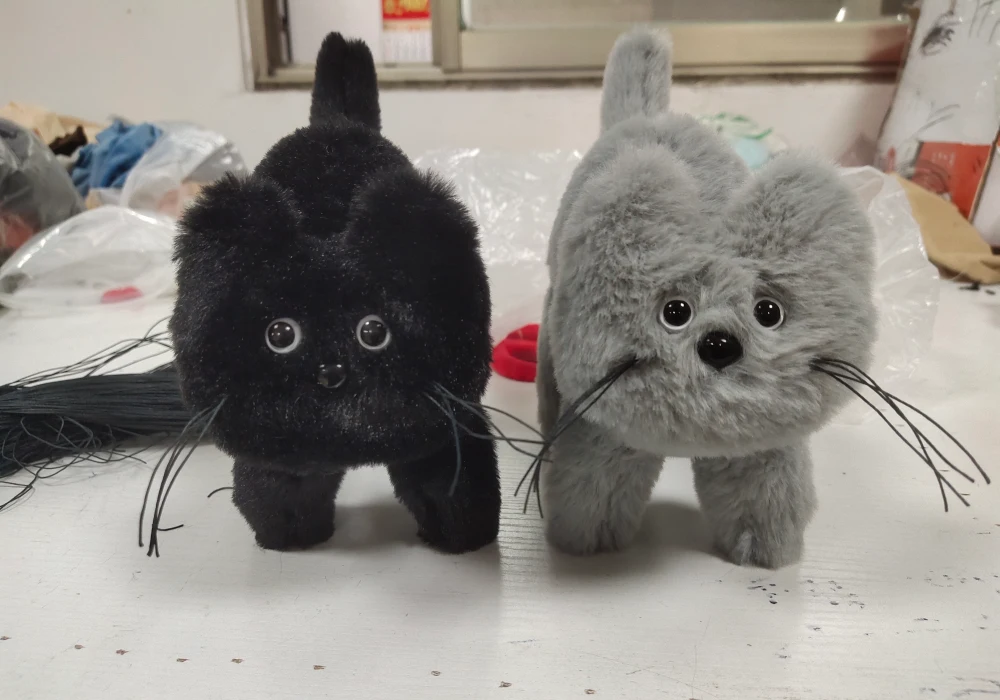
The final approved prototype is often called the golden sample. It becomes the physical reference for bulk production.
The approval should cover:
- Finished shape and dimensions
- Fabric and filling
- Colors
- Embroidery and printing
- Clothing and accessories
- Labels and tags
- Packaging
- Other project-specific details
A photograph alone may not capture softness, material texture or exact construction. For projects where these details are critical, approval of the physical sample provides a clearer production reference.
At Plushies4u, approved product details guide material preparation, cutting, embroidery, printing, sewing, filling and assembly before commercial production begins.
From the Approved Sample to Bulk Production
Once the sample and commercial specifications are confirmed, the project moves into production preparation.
The manufacturing sequence commonly includes:
- Preparing and checking fabrics, filling and accessories
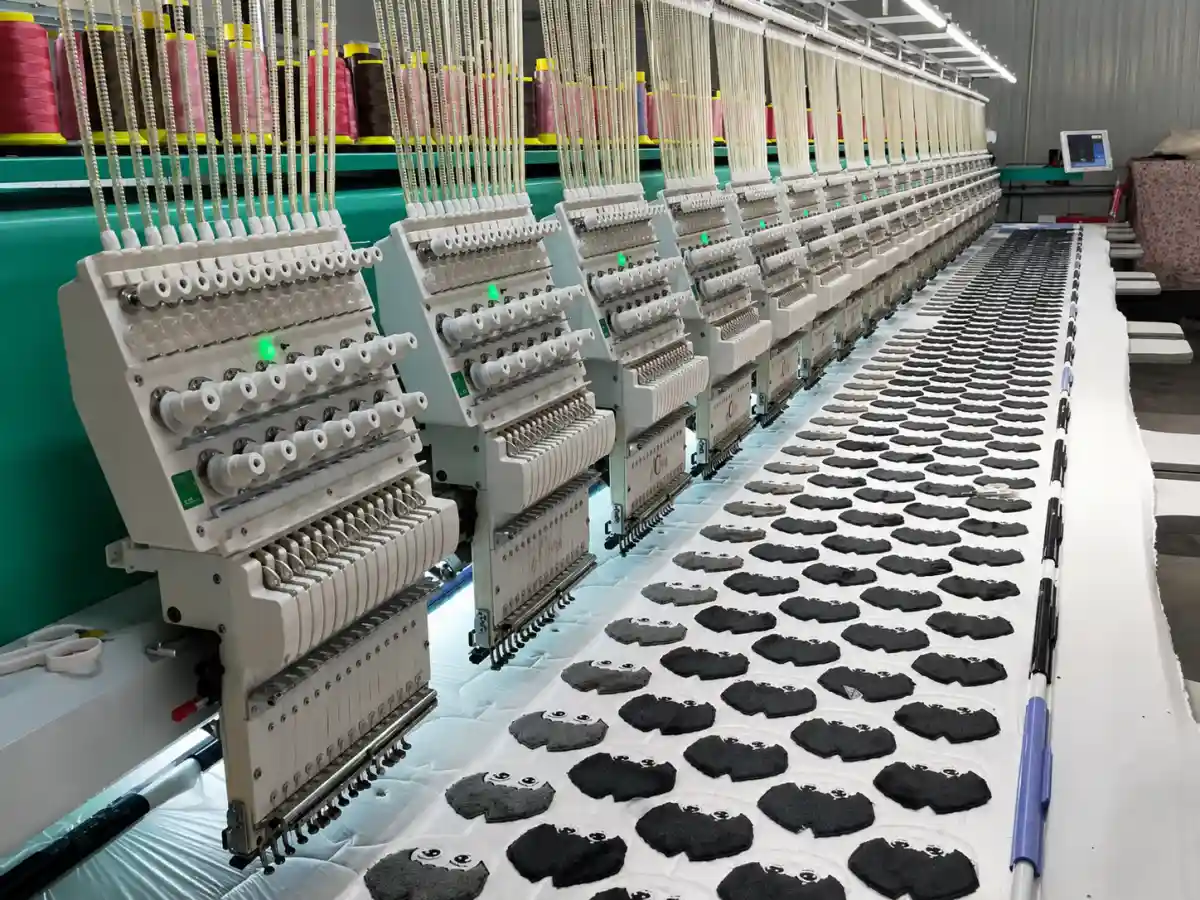
- Cutting fabric panels from the approved patterns
- Adding embroidery, printing or appliqué
- Sewing panels and product components
- Turning the sewn shell
- Filling and shaping the product
- Closing seams and attaching remaining details
- Inspecting appearance and workmanship
- Adding labels, tags and packaging
- Preparing export cartons and shipment documents
Quality control should follow the product through manufacturing. Plushies4u checks incoming materials, monitors sewing, stitching, embroidery, product shape and assembly during production, and inspects finished appearance, dimensions, details and packaging before shipment.
Buyer Approval Points During Development
Clear approvals keep the product moving without allowing unresolved details to enter bulk production.
| Approval point | Buyer decision |
|---|---|
| Initial brief | Confirm the intended product, size, quantity and market |
| Design interpretation | Confirm posture, proportions and treatment of unseen areas |
| Materials | Approve fabric, colors, filling and components |
| First sample | Review the complete physical interpretation |
| Revision | Confirm that requested changes have been applied |
| Golden sample | Authorize the final construction for production |
| Packaging | Approve labels, tags, retail presentation and carton requirements |
| Production inspection | Confirm that bulk units follow the approved reference |
For licensed or unreleased characters, the buyer should also establish who can approve the design and how confidential artwork will be handled. Commercial reproduction should proceed only with the appropriate rights or authorization.
Can AI Artwork Be Turned Into a Real Plush?
AI artwork can be used as a concept reference, but an AI plush generator does not create a production specification.
Generated images may contain:
- Different details on the left and right sides
- Accessories that merge into the body
- Inconsistent views
- Impossible seams
- Hair or clothing that appears to float
- Small decorative details that cannot be sewn
- No information about the back of the character
- Colors and textures that do not correspond to available materials
Before sampling, these conflicts need to be resolved into one consistent character design. The buyer should decide which image is authoritative and identify the features that must remain.
An AI render can communicate mood, proportions and texture. Pattern engineering and physical sampling determine whether the concept can become a repeatable product.
How Accurate Can the Finished Plush Be?
Accuracy should be judged by recognizability, proportions, expression, colors and important character features. Soft fabric cannot reproduce every line and angle in the same way as a flat illustration or hard figure.
The result usually improves when the buyer provides:
- Multiple views
- High-resolution artwork
- Clear color references
- Defined target size
- A list of essential character features
- Prompt and consolidated sample feedback
- Physical sample approval
A reliable factory should explain which details can be reproduced directly, which need another technique and which require proportion or construction changes.
One-Off Plush Commission Versus Bulk Manufacturing
A handmade commission usually produces one personal item from a photo or drawing. A commercial custom plush project has to create a product that can be reproduced across an order.
Bulk development therefore requires:
- Production-ready patterns
- Confirmed materials
- Repeatable embroidery or printing files
- Defined construction methods
- Approved labels and packaging
- Production quality controls
- Market and testing requirements
- A reference sample for future reorders
This distinction matters for brands, retailers, publishers, IP owners, schools, sports teams and promotional programs.
Frequently Asked Questions
How are plushies made from a picture?
The factory reviews the image, defines the missing views and product specifications, creates sewing patterns, selects materials and produces a physical sample. After revisions and final approval, the confirmed sample becomes the reference for bulk production.
Is one picture enough to start?
Yes. One clear picture can start the project. Multiple views and written details reduce the amount of interpretation required and usually make sample feedback more efficient.
Do I need professional artwork?
A finished character sheet is helpful but not always necessary. Development can begin from illustrations, sketches, reference photographs or an existing product concept. The available information must still be converted into clear product specifications before production.
Can a photograph of a real object or animal be used?
Yes. Multiple angles are helpful because the factory needs to understand the subject’s side profile, back, proportions, markings and distinctive features.
What details are difficult to reproduce?
Very thin limbs, tiny fingers, small text, sharp corners, complex gradients and unsupported accessories often need adaptation. The best treatment depends on the intended size and materials.
Can the plush sample be revised?
Yes. Sample review is the stage for correcting shape, expression, colors, materials, embroidery and accessories. The revision scope should be documented clearly before the next sample is produced.
Does sample approval guarantee every unit will be identical?
Textile products naturally have limited production variation. The approved sample and written specifications establish the intended standard, while production controls and inspection help keep the order consistent.
What information is needed for a quote?
Provide the artwork, target size, estimated quantity, destination market, intended use, material preferences, accessories, branding and packaging requirements.
Develop Your Character Into a Commercial Plush Product
Plushies4u has more than 27 years of plush manufacturing experience and supports brands, retailers, IP owners and promotional businesses from concept review through sampling, bulk production, inspection and packaging. Commercial orders start from 500 pieces, with capacity depending on product size, design complexity, materials and production scheduling.
Send your character artwork, reference images, target dimensions, estimated quantity and intended market through the Plushies4u project inquiry page to discuss how the design can be developed into a production-ready custom plush.