Custom Mascot Plush Toys: From Brand Design to Production
A brand mascot plush toy has a job beyond looking appealing: people should recognize the character when they see it on a shelf, at an event, or in a customer’s hands. Turning a flat design into a soft, three-dimensional product can change its proportions, expression, colors, and posture. Small changes to an eye position or a signature accessory may matter more than a larger change elsewhere.
The most reliable development process starts by identifying the features that make the mascot recognizable. The brand then reviews those features in a physical sample, records the approved details, and uses that sample as the reference for bulk production. This guide explains what to prepare, what design decisions to make, and what to check before approval.
What Makes a Brand Mascot Different From a Regular Plush Toy?
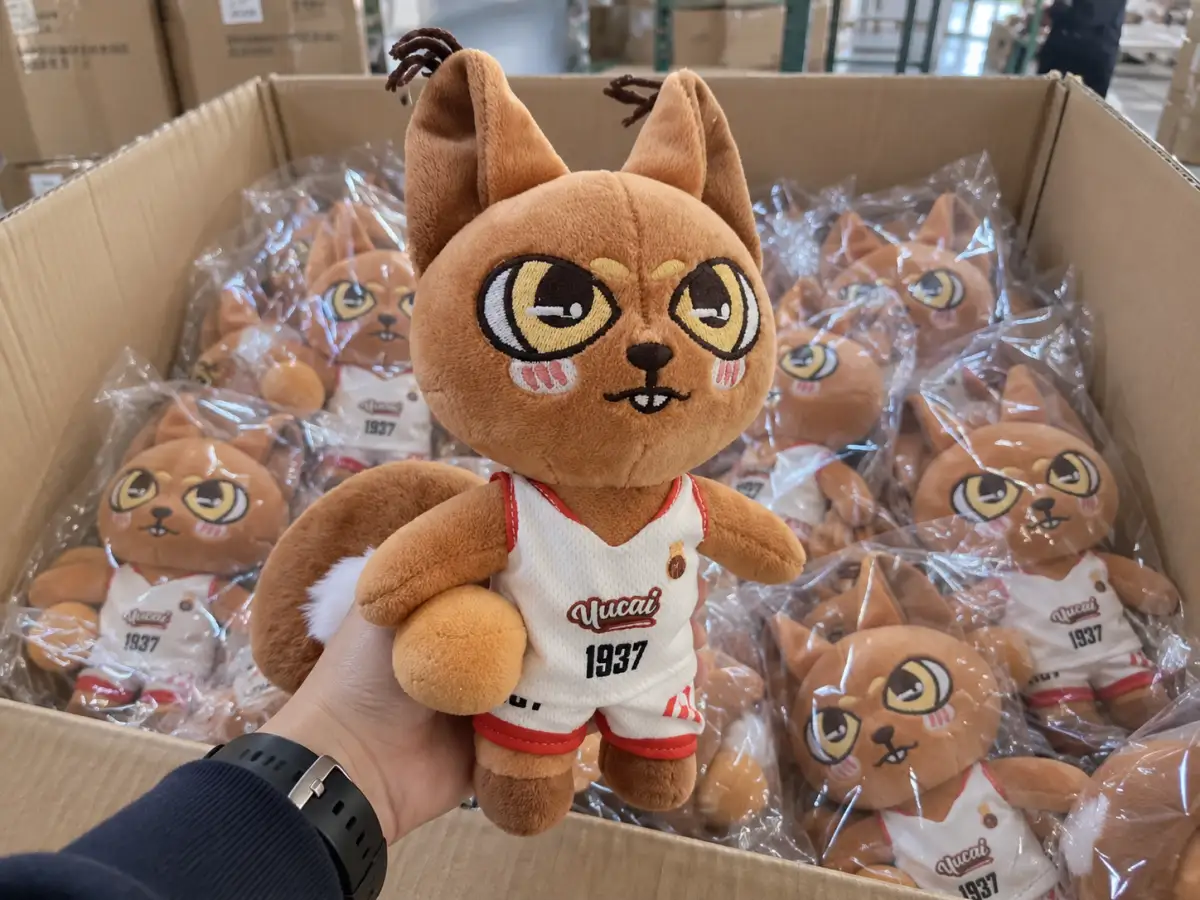
A regular stuffed animal can succeed because it is soft and attractive. A branded mascot must also resemble a specific character. Its distinctive head-to-body ratio, facial expression, outline, colors, clothing, and logo may all contribute to recognition.
That does not mean every line of the original illustration must appear literally in fabric. A sharp point may become rounded when filled. A tiny printed word may be unreadable at toy size. A large mascot costume head may need different proportions to make a smaller plush sit securely. The development decision is which details must remain recognizable and which can be adapted for soft construction.
Identify those priorities before sampling. For one mascot, the face and unusually shaped ears may be essential; for another, the uniform and color blocks may do most of the work. If the character or logo belongs to another organization, establish the right to reproduce it for merchandise before commissioning production. The U.S. Copyright Office notes that using someone else’s protected artwork generally requires the owner’s permission.
What Artwork and Brand Assets Should You Prepare?
A manufacturer can begin discussing a mascot plush from one image. A complete reference pack gives the sample team fewer details to interpret and gives the brand team a clearer basis for approval.
Mascot artwork and character references
Provide front, side, and back views when available. Add close-ups of the face, markings, costume, and accessories. An existing costume can also be photographed from several angles, but its proportions should be treated as a reference rather than an automatic pattern for the plush.
High-resolution artwork helps with shape and detail review. Vector files are especially useful for logos. If only a front view exists, mark which unseen details the manufacturer may propose and which must be approved by the brand.
Brand colors, logos, and essential features
Include official color references, logo files, and any brand guidelines that govern the character. Label the features that cannot change, such as a particular smile, two-tone ear, hat shape, or logo position. Separately identify details where an adaptation is acceptable.
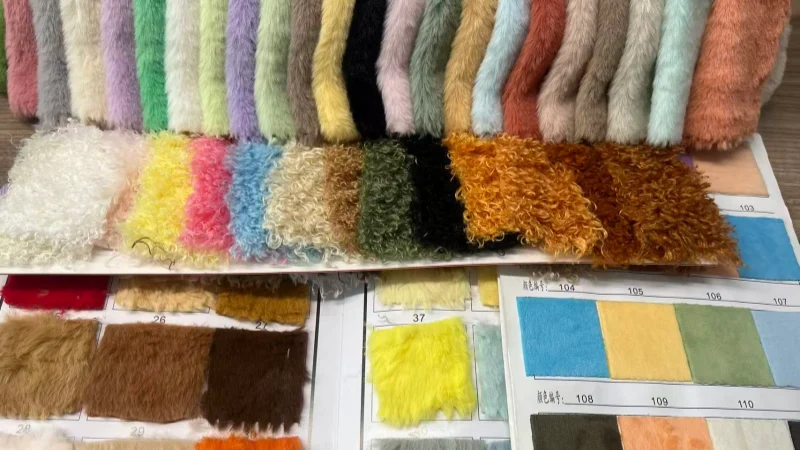
A color displayed on a screen can look different on short plush, faux fur, embroidery thread, or printed fabric. Approve color using material swatches or the physical sample under suitable lighting, especially when it is central to brand recognition.
Project requirements and authorization
The design pack also needs a product brief. Without a target size and use, it is difficult to decide whether a small detail should be embroidered, printed, simplified, or made as a separate piece.
| Include in the project brief | What it helps settle |
|---|---|
| Front, side, and back references | Shape, depth, and details not visible from the front |
| Must-keep character features | Priorities when artwork needs adapting |
| Logo artwork and brand colors | Decoration method, placement, and color review |
| Target size and preferred pose | Proportions, balance, and practical detail size |
| Intended use and age group | Construction and product assessment |
| Destination market | Testing, labeling, and packaging planning |
| Estimated order quantity and launch date | Production planning and quotation |
| Clothing, accessories, and packaging | Complete sample and order scope |
| Brand or IP authorization, where applicable | Permission to produce the design |
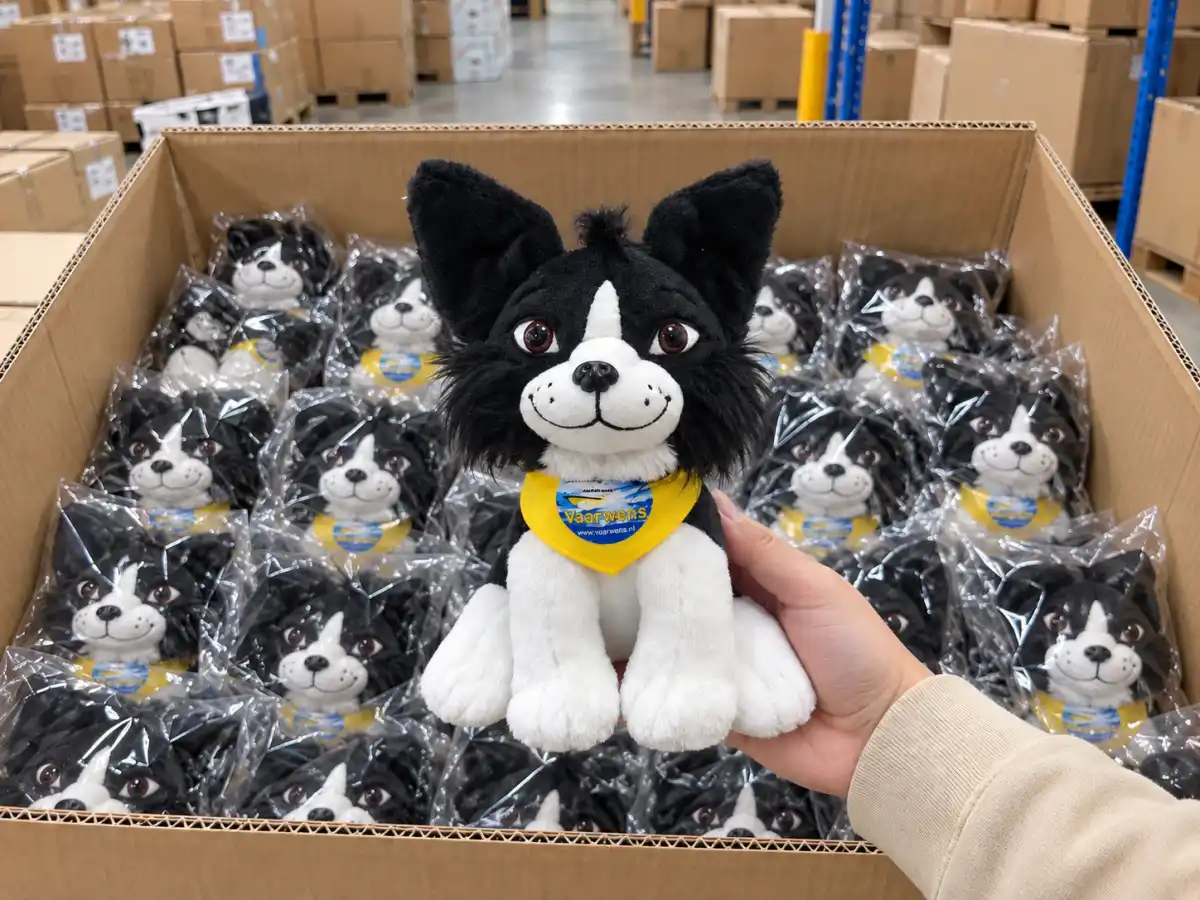
Once these materials are assembled, the brand can discuss custom mascot plush manufacturing with a clearer design and purchasing brief.
How Do You Preserve a Mascot’s Identity in Plush Form?
The first design review should focus on recognition, not on choosing fabric in isolation. Look at the character’s silhouette, face, proportions, colors, and signature items as a group.
Keep the proportions people recognize
Compare the mascot’s head width, body length, ears, limbs, and accessories in the original artwork. Then decide how the plush should be viewed and used: sitting on a desk, standing in a display, hanging as a small accessory, or being held.
Pose changes what is visible. A long tail may disappear behind a seated toy. A costume logo may fold across a rounded body. An oversized head may affect balance. These issues are easier to address while the pattern and sample are being developed than after the brand has approved the product.
Simplify details deliberately
Soft fabric cannot reproduce every sharp edge or fine graphic line. The brand should approve adaptations according to their effect on recognition:
| Artwork detail | Possible plush adaptation | Brand decision |
|---|---|---|
| Thin arms or narrow points | Broader sewn shape | Does the outline still read as the same character? |
| Small facial lines | Embroidery or printing | Is the expression still correct? |
| Tiny logo lettering | Larger mark, simplified version, or label | Is the official mark being used appropriately? |
| Complex color gradient | Printing or selected solid color areas | Which colors are essential to recognition? |
| Floating costume detail | Attached fabric component | Does it look correct from all main viewing angles? |
The brand should approve changes to protected character features rather than leave those decisions to informal interpretation during production.
Adapt an existing mascot costume
A wearable mascot costume can be an excellent visual reference, particularly for its head, uniform, and color placement. It cannot simply be reduced to toy size. The plush needs its own depth, seams, limb proportions, filling, and sitting or standing structure.
Photograph the costume from multiple angles, then identify where the toy should match it closely and where a smaller format needs adjustment. For the broader process of developing a three-dimensional toy from artwork or photos, see how to turn a picture into a custom plush toy.
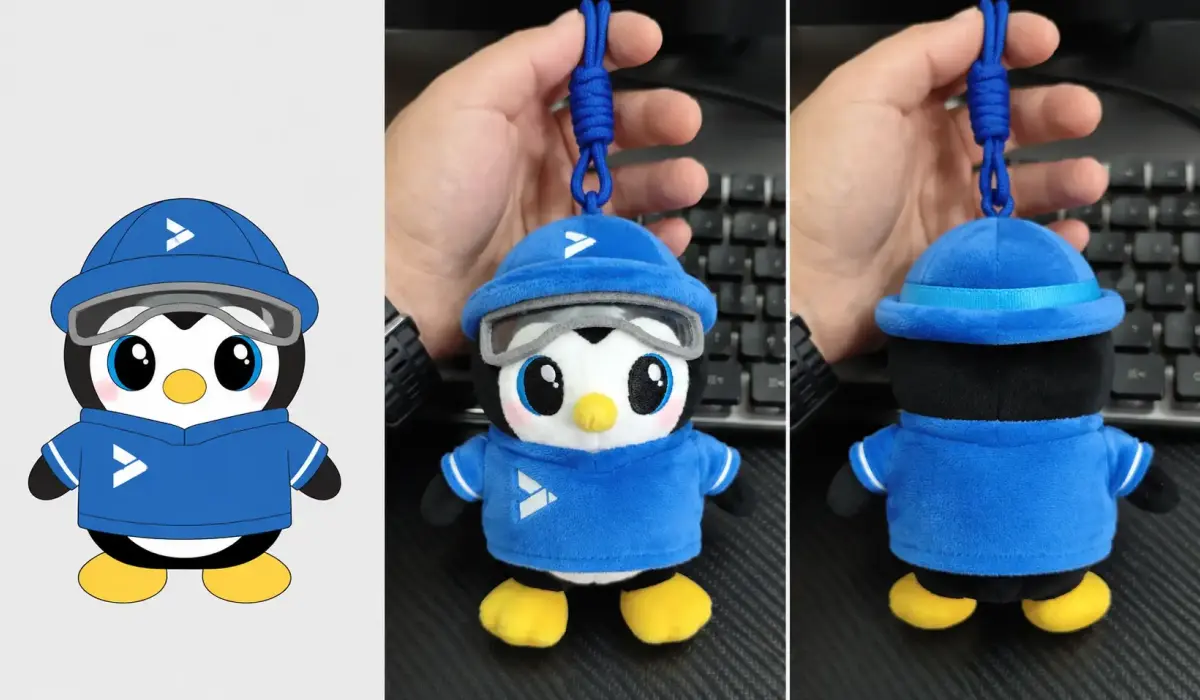
Choose Size, Pose, Fabric, and Decoration Together
These choices affect one another. A logo that reads clearly on a medium plush may be too small on an event giveaway. A long-pile fabric may create the right furry look but obscure fine facial embroidery. A standing pose may display a uniform better than a seated pose, while requiring more attention to balance.
Start with the product’s job. A small giveaway needs a recognizable face and simple details at its finished size. A retail collectible may allow more clothing and decoration. A larger display plush can show features that are difficult to reproduce in miniature.
Review fabric on the actual sample. Shorter-pile surfaces often make small embroidered or printed features easier to see; longer pile creates a fuller texture but can cover them. Embroidery can suit facial lines and appropriate logo details, printing can carry complex graphics, and sewn or appliqué pieces can create distinct color blocks. Clothing and accessories add character, but also change bulk, attachment, and how the plush sits.
Approve the combination—not a fabric swatch, logo proof, or drawing separately. The question is whether the finished toy, at the selected size and pose, still looks like the mascot.
What Should Brands Check Before Approving a Mascot Plush Sample?
Approve the physical character, not just the photograph. A photo can show a misplaced logo or incorrect color, but it may hide a balance problem, stiff hand feel, uneven filling, or a detail that disappears from the side.
Give the sample to both the brand decision-maker and the person responsible for the product order. Review it beside the approved artwork and specifications. If several departments need to comment, collect one agreed set of feedback before sending revisions to the manufacturer.
Mascot plush prototype approval checklist
| Check | What the brand should confirm |
|---|---|
| Character silhouette | Is the mascot recognizable before looking closely at its logo? |
| Face and expression | Are the eyes, mouth, and other defining features in the right positions? |
| Head and body proportions | Does the sample preserve the intended character relationship? |
| Brand colors | Do the actual fabric, print, and embroidery colors meet the approved references? |
| Logo | Are its version, size, orientation, clarity, and placement correct? |
| Costume and accessories | Are signature items accurate and appropriately attached? |
| Pose and stability | Does the toy sit, stand, or hang as intended? |
| Size | Do the finished dimensions suit the proposed use? |
| Fabric and filling | Do texture, softness, shape, and weight feel right? |
| Side and back views | Are markings, seams, and costume details correct beyond the front view? |
| Labels and packaging | Are the agreed brand and product details included? |
| Final reference | Are the approved physical sample and written specifications clearly identified? |
For a U.S. children’s toy, the intended age group and finished design also affect the applicable safety requirements. The U.S. Consumer Product Safety Commission’s toy guidance explains that toys intended primarily for children 12 or younger require applicable third-party testing and a Children’s Product Certificate. Resolve the product’s intended market and age group during development so they can inform components and assessment.
Give revision feedback that can be acted on
Feedback such as “make it look more like our mascot” identifies a problem but not a change. Mark the sample photo and describe the intended result: narrow the face while retaining its height, move a logo above a seam, or make an ear visible from the front.
Separate brand-critical corrections from preferences. A wrong eye shape or signature color may change the character’s identity; a preference for a slightly softer body may be less urgent. Ask the manufacturer how a proposed change affects other details. Altering the head shape, for example, can change the placement of the face or how a hat fits.
Review the revised sample against the same checklist. When it is approved, record that version as the production reference along with its materials, dimensions, decoration, accessories, and packaging. Approval of a photo alone may be insufficient when texture, color, posture, or construction is important.
How Is Brand Consistency Maintained in Bulk Production?
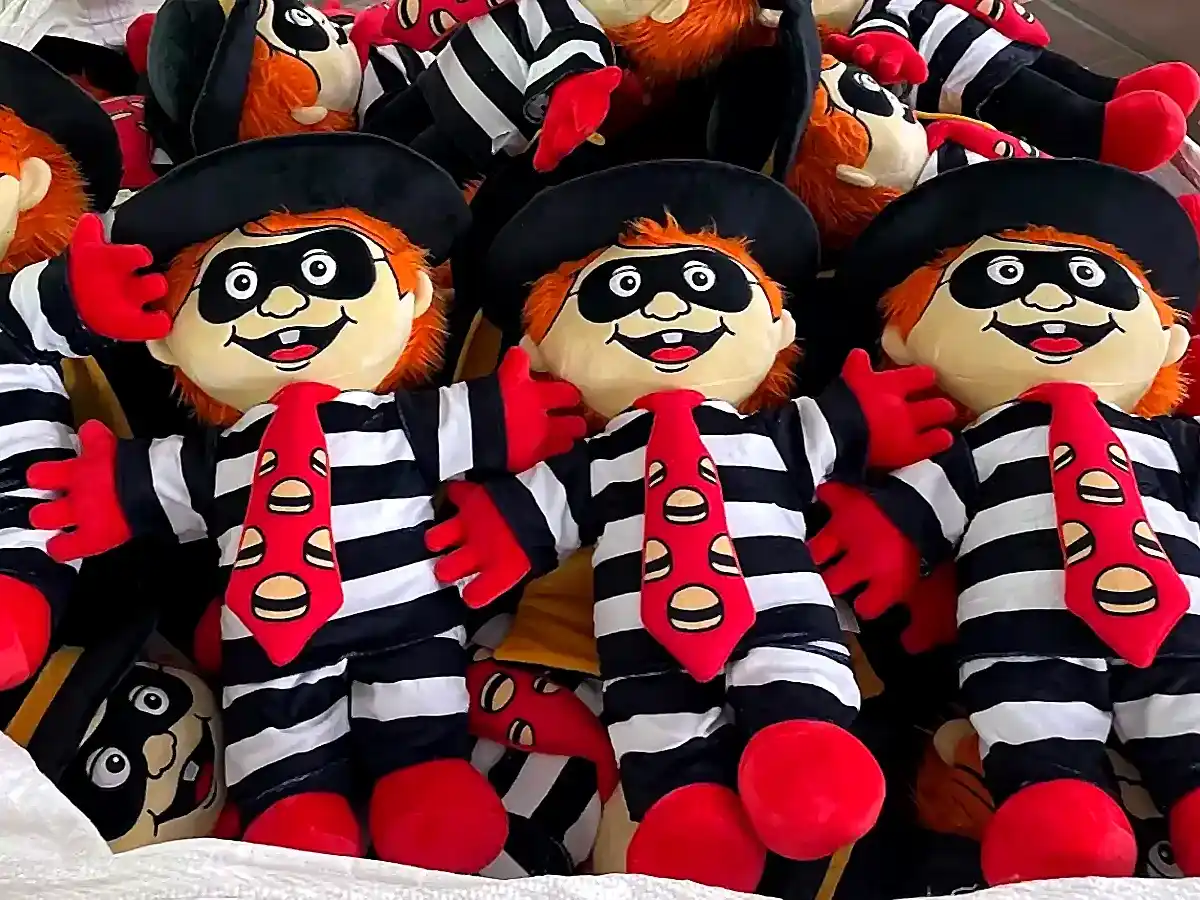
The final approved sample shows what the order is supposed to become. Written specifications make its less visible details repeatable: material choices, colors, dimensions, logo artwork, decoration positions, costume parts, labels, and packaging.
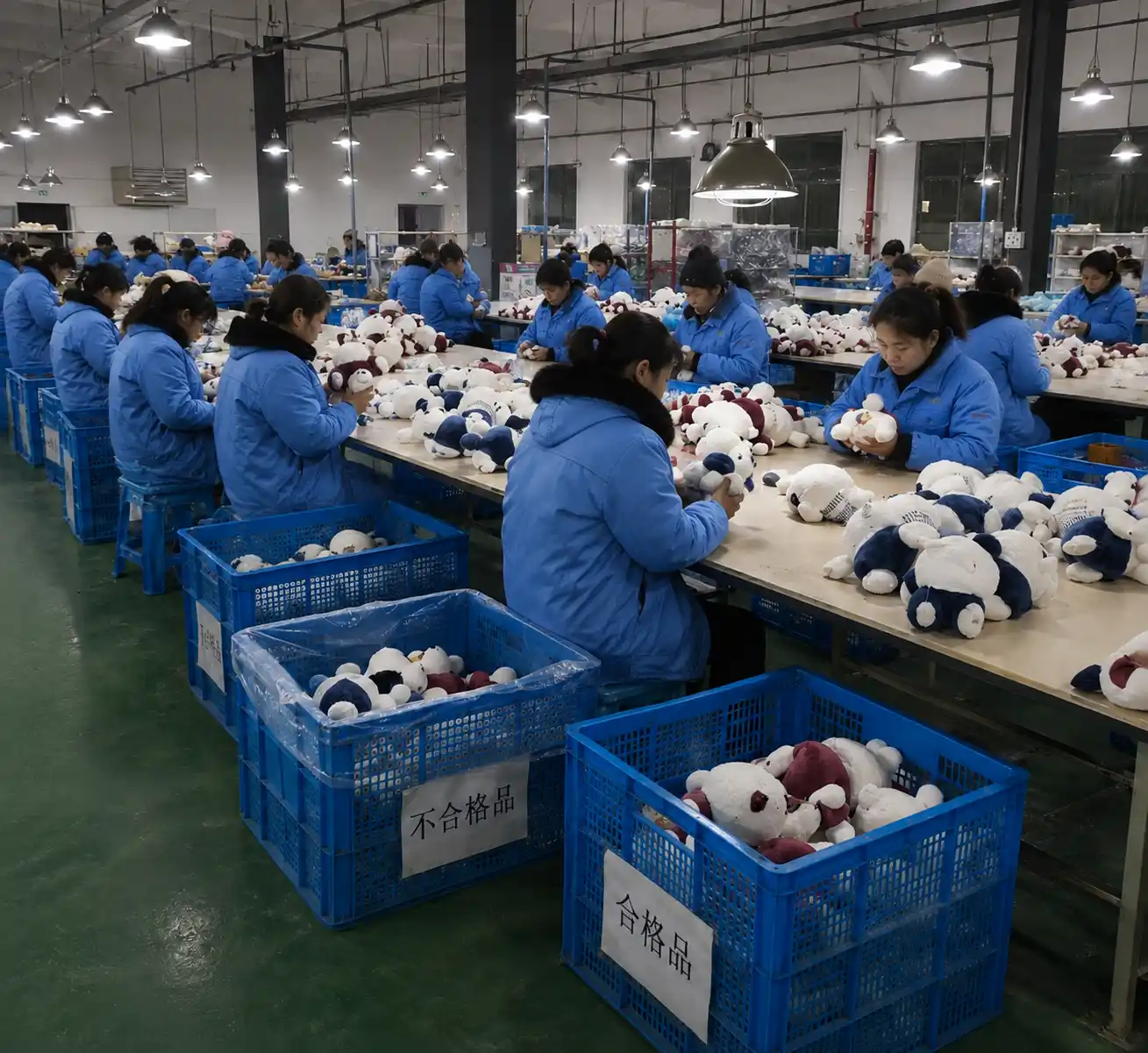
At Plushies4u, incoming fabrics, filling, and accessories are checked against confirmed requirements. Production monitoring covers sewing, product shape, stitching, embroidery, and assembly; finished products are inspected for appearance, dimensions, details, workmanship, and packaging. The brand’s approved sample provides the visual reference for mascot-specific features. The wider sequence is explained in how plush toys are made.
For a mascot order, comparisons should concentrate on the features a customer notices first: face, silhouette, principal colors, logo, and signature clothing. A toy can meet its general dimensions yet still look unlike the approved character if its expression or color placement changes.
Common Mistakes in Mascot Plush Development
| Mistake | Likely consequence | Better approach |
|---|---|---|
| Supplying only a front view | The side, back, and depth must be interpreted | Provide more views or approve the proposed interpretation in the sample |
| Giving a color seen only on screen | Fabric and thread may look different | Review physical swatches or the sample against brand references |
| Requiring tiny logo text at a small toy size | The mark may lose clarity | Assess it at finished size and approve a suitable treatment |
| Ignoring the intended pose | The mascot may lean, hide details, or fail to sit as expected | Define the pose before pattern and sample approval |
| Sending conflicting feedback from several teams | Revisions become unclear | Assign one brand approver and send consolidated comments |
| Starting bulk production before final sample approval | Unresolved design issues can repeat across the order | Approve a clearly identified sample and specification first |
| Leaving rights or destination-market requirements until late | Artwork use or product details may need reconsideration | Establish authorization, intended age group, and market in the initial brief |
Frequently Asked Questions
Can a mascot plush toy be made from just one picture?
One picture is enough to begin a discussion, especially for a simple character. It may not show the side, back, thickness, or attachment of accessories. Those details need to be supplied or settled during sample development.
Can an existing mascot costume become a plush toy?
Yes. Photographs of the costume can guide the character’s appearance, colors, and clothing. The smaller plush still needs its own proportions, pattern, and construction, which should be reviewed in a physical sample.
How do manufacturers match brand colors?
Brand color references guide fabric and thread selection. The brand should approve the actual swatches or finished sample because textile texture, pile direction, printing, and lighting can affect appearance.
Can mascot plush toys include custom uniforms and embroidered logos?
They can, depending on the character design and finished toy size. Plushies4u supports custom clothing, embroidery, printing, fabrics, labels, and accessories. The sample should confirm that the chosen treatment remains clear and correctly placed.
What matters most when approving a sample?
Start with recognizability: silhouette, face, proportions, principal colors, and signature details. Then check the pose, size, materials, filling, labels, packaging, and the final written specification.
What is the minimum order quantity?
Plushies4u’s standard commercial orders start from 500 pieces. Share the mascot design and quantity to confirm the arrangement for that specific project.
How long do sampling and bulk production take?
The schedule depends on the design, materials, revisions, order quantity, testing needs, and production plan. Ask for a project schedule that separates initial sampling, brand review and revisions, bulk production, inspection, and delivery.
Do I need permission to manufacture a branded mascot?
If your organization does not own the character artwork, logo, or other protected elements, obtain the appropriate authorization from the rights holder before arranging reproduction. Include any brand-use restrictions in the design brief.
Bring Your Brand Mascot Into Plush Form
A successful mascot plush preserves the character features people recognize while adapting them to a soft product that can be made consistently. Prepare a clear reference pack, decide which details are essential, review the physical sample from every important angle, and approve its final specifications before bulk production.
Planning a mascot plush project? Share your artwork, brand guidelines, preferred size, intended market, and estimated quantity with Plushies4u to discuss sampling and manufacturing options.