Custom Plush Keychains: Materials, Sizes and Bulk Production
A custom plush keychain has to work at two scales: the character must remain recognizable in miniature, and the finished product must hang well from a ring, clasp or loop. For a bulk order, choose the fabric, finished size and hardware together, then approve a physical sample that shows how those choices work in practice.
Plushies4u lists 8–16 cm as a reference size range for its custom plush keychains, with other sizes developed around the artwork and intended use. Its listed MOQ starts at 500 pieces. The final construction, materials and packaging are confirmed for each project. Explore the custom plush keychain options.
Start With the Product Brief
Before comparing fabrics or requesting a quote, decide whether the product is primarily a keychain, a bag charm, a promotional giveaway or a retail collectible. That decision affects its size, attachment and packaging.
| Brief item | What to specify | Why it matters |
|---|---|---|
| Artwork | Front view, available side and back views, color references, and must-keep features | Defines what needs to remain recognizable at a small size |
| Intended use | Keys, backpack, handbag, retail display or collectible series | Guides size, hardware and presentation |
| Target size | Finished plush dimensions, excluding the attachment | Gives the pattern maker a clear development target |
| Materials | Preferred feel, surface texture and colors | Affects appearance and the clarity of small details |
| Hardware | Ring, clasp, chain, clip or loop, including finish and position | Determines how the plush attaches and hangs |
| Branding | Logo, label, clothing, hangtag and packaging artwork | Identifies details that need space in the design |
| Order requirements | Quantity by design, destination market and intended age group | Supports production planning and applicable safety review |
If the design starts with a single illustration, identify which features are essential and where the factory may interpret the unseen sides. The guide to turning a picture into a custom plush explains how artwork becomes a three-dimensional sample.
Which Fabric Works Best for a Plush Keychain?
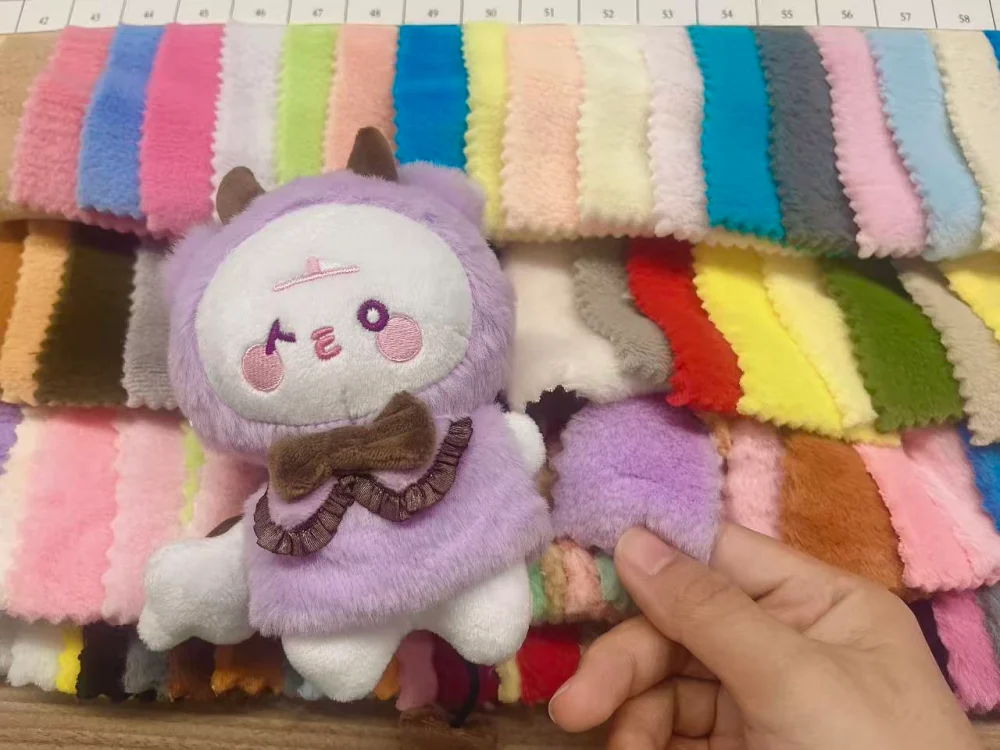
The best fabric depends on the character’s appearance and the amount of detail it needs to show. Pile length is especially noticeable on a miniature product: a fluffy surface can give an animal character warmth and volume, while a shorter surface leaves more room for a clear face or small logo.
| Fabric | Useful when the design needs… | Check on the sample |
|---|---|---|
| Minky | A soft, smooth plush feel | Whether the chosen pile and color keep facial details clear |
| Velboa | A relatively short, even plush surface | How embroidery, printing and seams appear on the finished shape |
| Short plush | A compact plush look with visible small features | Pile direction and consistency between panels |
| Faux fur | A fluffy animal feature, hair or textured accent | Whether the pile hides the eyes, mouth, logo or body outline |
| Fleece | A soft fabric surface with little visible pile | Surface appearance, shape and the effect of stitching |
These are selection starting points, not fixed recipes. Two fabrics with the same general name can look different in the finished product. Review physical swatches alongside embroidery or print samples when color and character accuracy matter.
A mixed-material design may solve a common miniature-scale problem. For example, a character could use a shorter-pile face so its expression remains visible, with faux fur reserved for ears or hair. The sample will show whether the transition between fabrics looks intentional and whether the seams remain neat.
Plushies4u also lists polyester fiber filling and project-specific filling options. Filling quantity affects the keychain’s silhouette and how it hangs; ask the sample maker to match the feel and shape you want rather than specifying fabric alone.
How to Choose the Finished Size
A smaller keychain is easier to carry, but it leaves less room for facial features, clothing, separate limbs and branding. A larger plush charm offers more design space while adding visual weight to a bag or backpack.
| Size direction | Often suits | Design question to resolve |
|---|---|---|
| Compact end of the range | Simple icons, small animals, giveaways and collectible charms | Can the essential face and silhouette still be read clearly? |
| Middle of the range | Character merchandise with moderate detail | Is there enough room for the logo, accessories and chosen hardware? |
| Larger end of the range | Bag charms, mascots and designs with clothing or prominent features | Does the product hang comfortably and fit its intended packaging? |
Plushies4u’s 8–16 cm range is a useful starting point for discussing its products; the right size still depends on the artwork. State whether your target measurement includes ears, tails or other projecting features, and specify that the hardware is excluded unless you intend otherwise.
Do not simply reduce a full-size plush pattern. At keychain scale, thin limbs may need to become wider, tiny fingers may become embroidered marks, and a layered outfit may need fewer pieces. Compare the proposed size with a printed outline of the artwork before sampling. If a detail disappears at that scale on paper, ask how it will be represented in fabric.
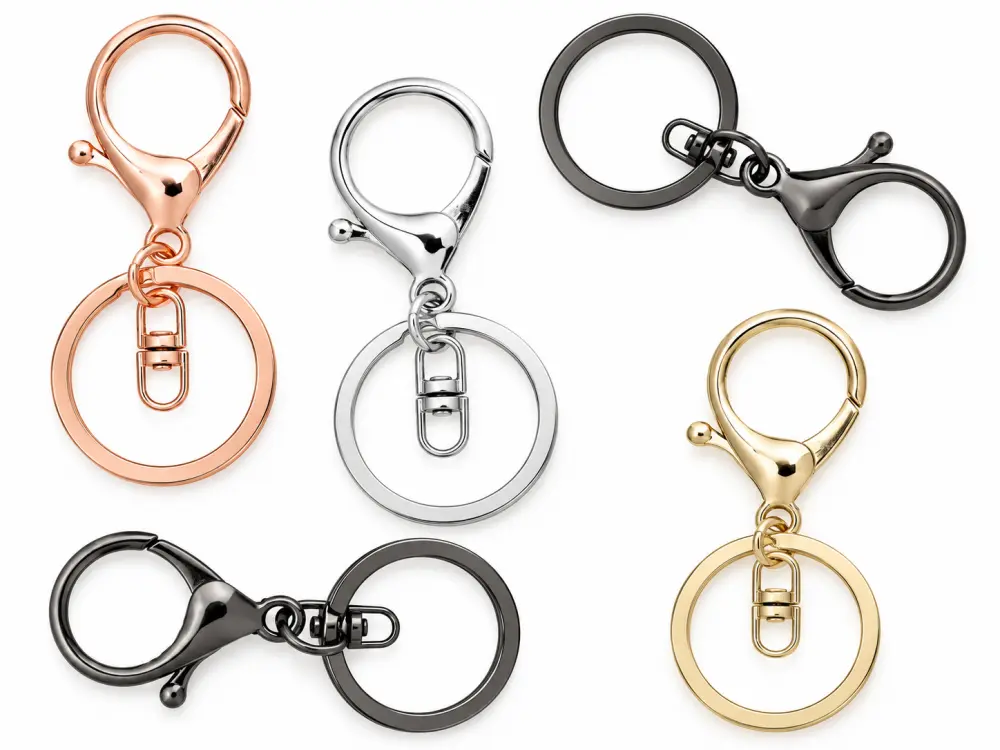
Match the Hardware to the Way It Will Be Used
Hardware changes the look and balance of the whole product. Select it before the attachment point is finalized in the sewing pattern.
| Attachment | Consider it for | Sample check |
|---|---|---|
| Split key ring | Traditional keychains and general merchandise | Is the ring practical to use, and does the plush hang without twisting? |
| Lobster clasp | Bag charms that customers may move between items | Is the clasp easy to operate on the intended strap or zipper pull? |
| Ball chain | Small, lightweight charms and collectible series | Is the connection secure for the intended use? |
| Decorative carabiner | Larger bag charms where hardware is part of the look | Does its scale suit the plush and packaging? Treat it as an accessory attachment, not climbing equipment. |
| Braided rope lanyard | Character charms needing a soft, visible loop | Are the loop length, color and attachment position right? |
| Plastic keychain clip | Lightweight, colorful promotional designs | Is the chosen clip suitable for the intended product and audience? |
Plushies4u shows these attachment styles on its custom plush keychain product page. Confirm the exact component, finish and construction for your project during sampling.
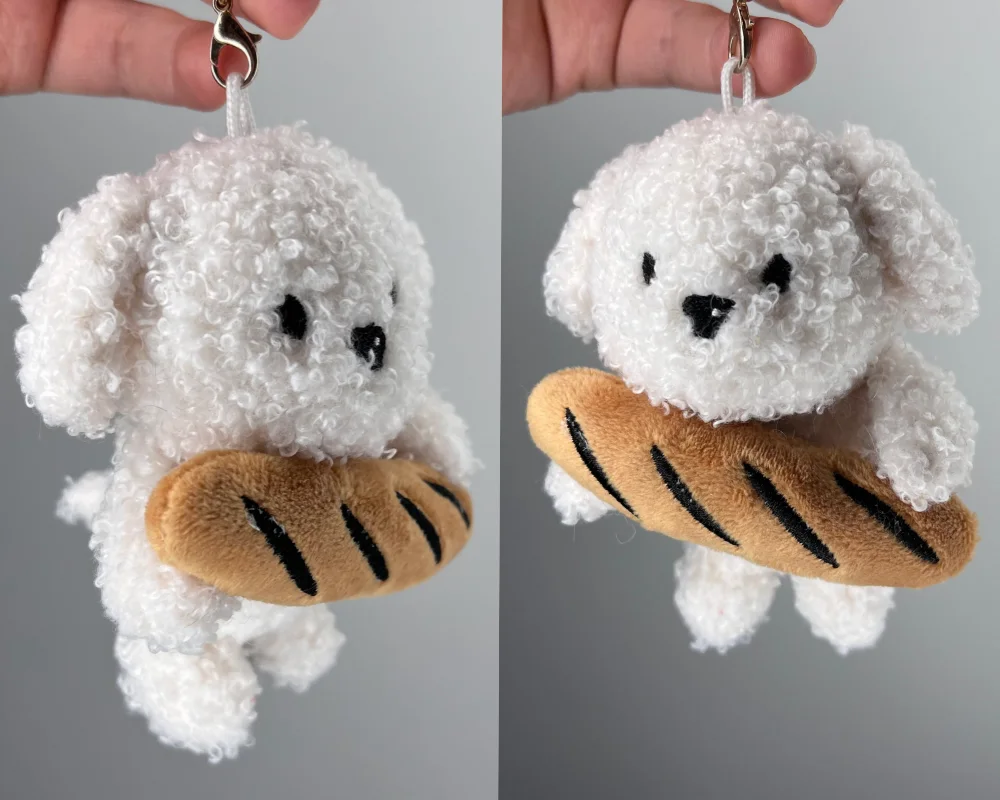
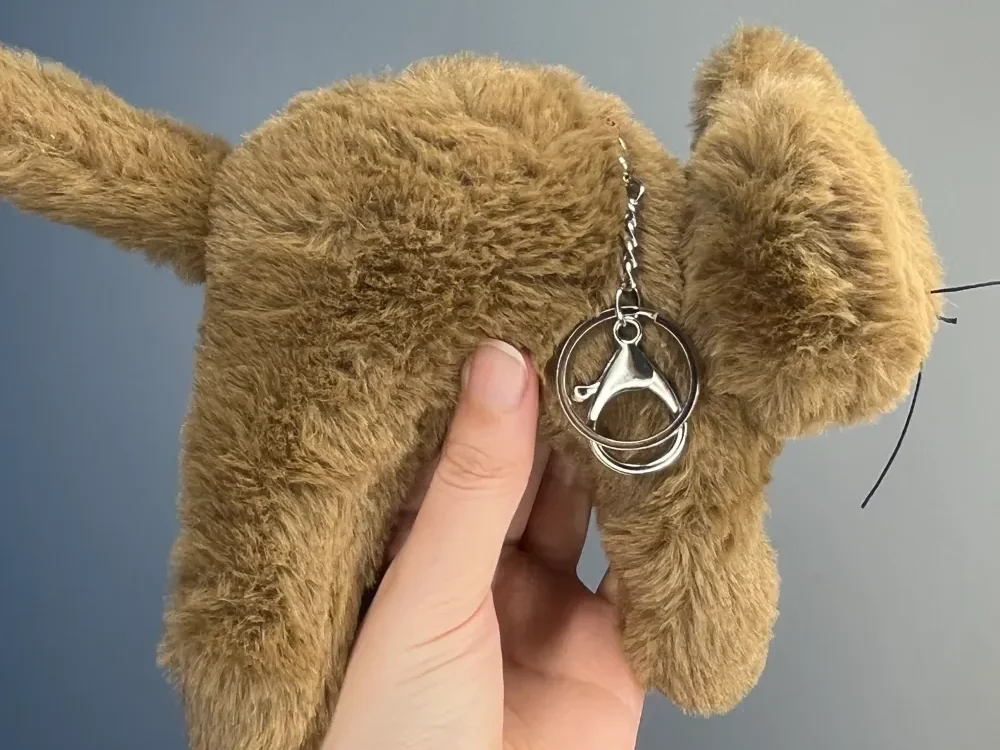
The position of the attachment matters as much as its type. A loop placed at the geometric center of the head may still make an asymmetrical character tilt. Check the sample while it hangs from a key ring, bag strap or display hook similar to the one customers will use. Look at the front, side and back; a charm that looks balanced on a table may turn away when suspended.
Adapt the Character Before Making the Sample
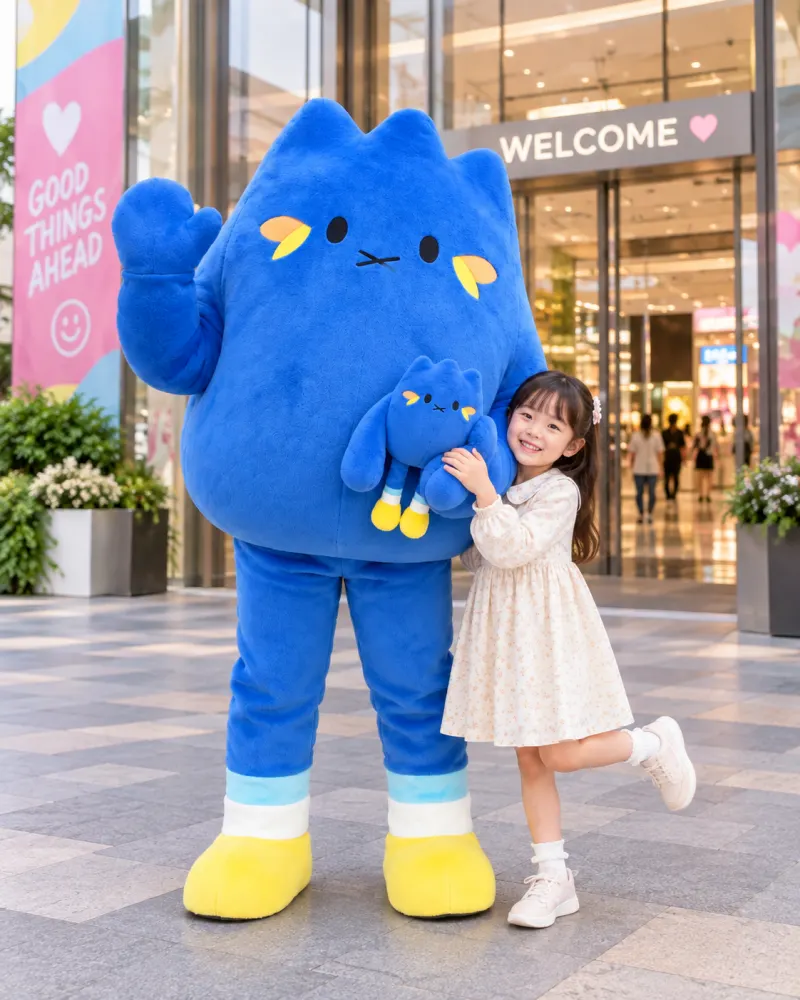
A successful mini plush keeps the features that make the character identifiable. Ask the development team to rank those features before simplifying anything.
Start with the silhouette and face. The head shape, eye spacing, mouth and signature colors often carry more recognition than tiny decorative marks. Embroidery can represent a small facial feature without adding a separate sewn part. Printing may suit artwork that relies on fine graphic detail. Appliqué can create a larger color area or emblem. Review each method on the actual fabric: a logo that looks clear in a digital mockup may be difficult to read once stitched at keychain size.
Clothing and accessories need the same review. A miniature uniform may retain its recognizable colors and emblem while using fewer seams and layers. Small hats, scarves, ears and tails should be checked for position and shape after the plush is filled. If a detail is essential, state that in the brief; if it can be simplified, give the pattern maker room to propose a sewable version.
What to Approve on the Physical Sample
Sample approval is the point at which design choices become a production reference. Review the finished plush with its actual hardware, labels and proposed packaging, not just the sewn body.
Use this checklist:
- Shape and size: Check the finished dimensions and the outline from the front, side and back.
- Character identity: Compare the expression, proportions, colors and must-keep features with the approved artwork.
- Fabric and filling: Check texture, pile direction, softness, firmness and whether filling changes the intended shape.
- Decoration: Inspect embroidery, printing, appliqué, logos and small text at normal viewing distance.
- Clothing and accessories: Check fit, bulk, placement and appearance while the product hangs.
- Hardware and attachment: Confirm the component, finish, connection and position. Hang the sample from its intended point and look for excessive tilt, twisting or fabric distortion.
- Branding and packaging: Confirm labels, hangtags, backing cards, bags or boxes with the finished sample inside.
- Market requirements: Confirm the intended age group and destination market so the applicable product and packaging requirements can be addressed.
Record each requested revision against the sample, then approve the corrected version and written specification together. The approved sample provides the reference for bulk production; a photograph alone may miss fabric feel, attachment behavior or three-dimensional shape. For a fuller view of the subsequent factory stages, see how plush toys are made.
What Changes When the Order Goes Into Bulk Production?
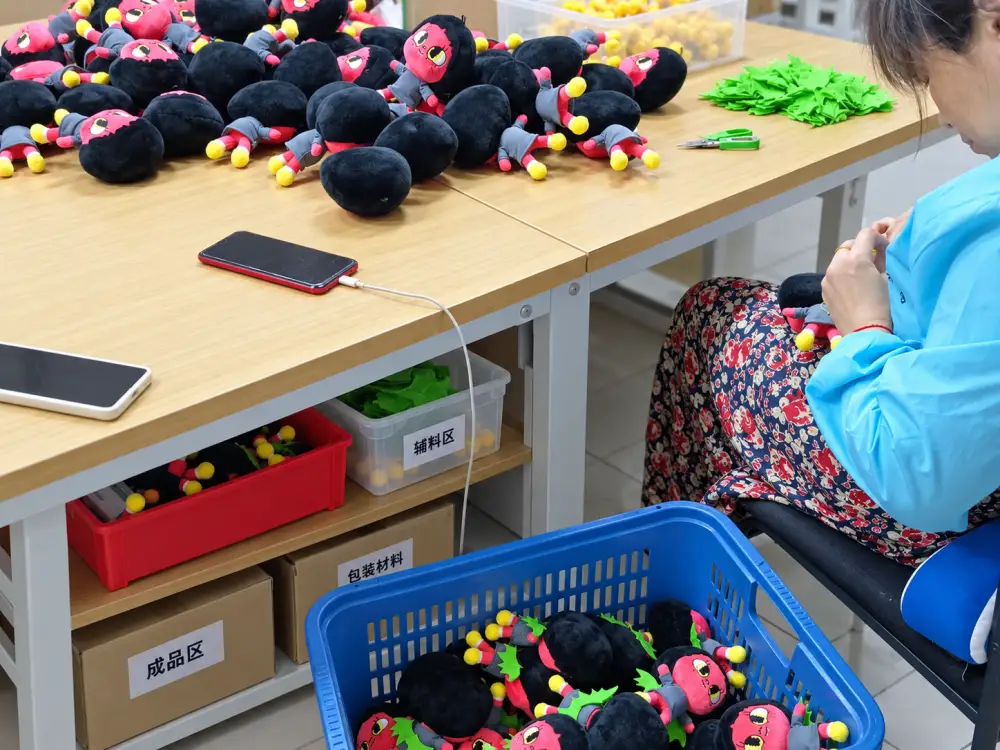
Bulk production must reproduce the approved sample across the order. Small products make variation conspicuous: a slight shift in eye placement, filling or attachment position can change the expression or hanging angle.
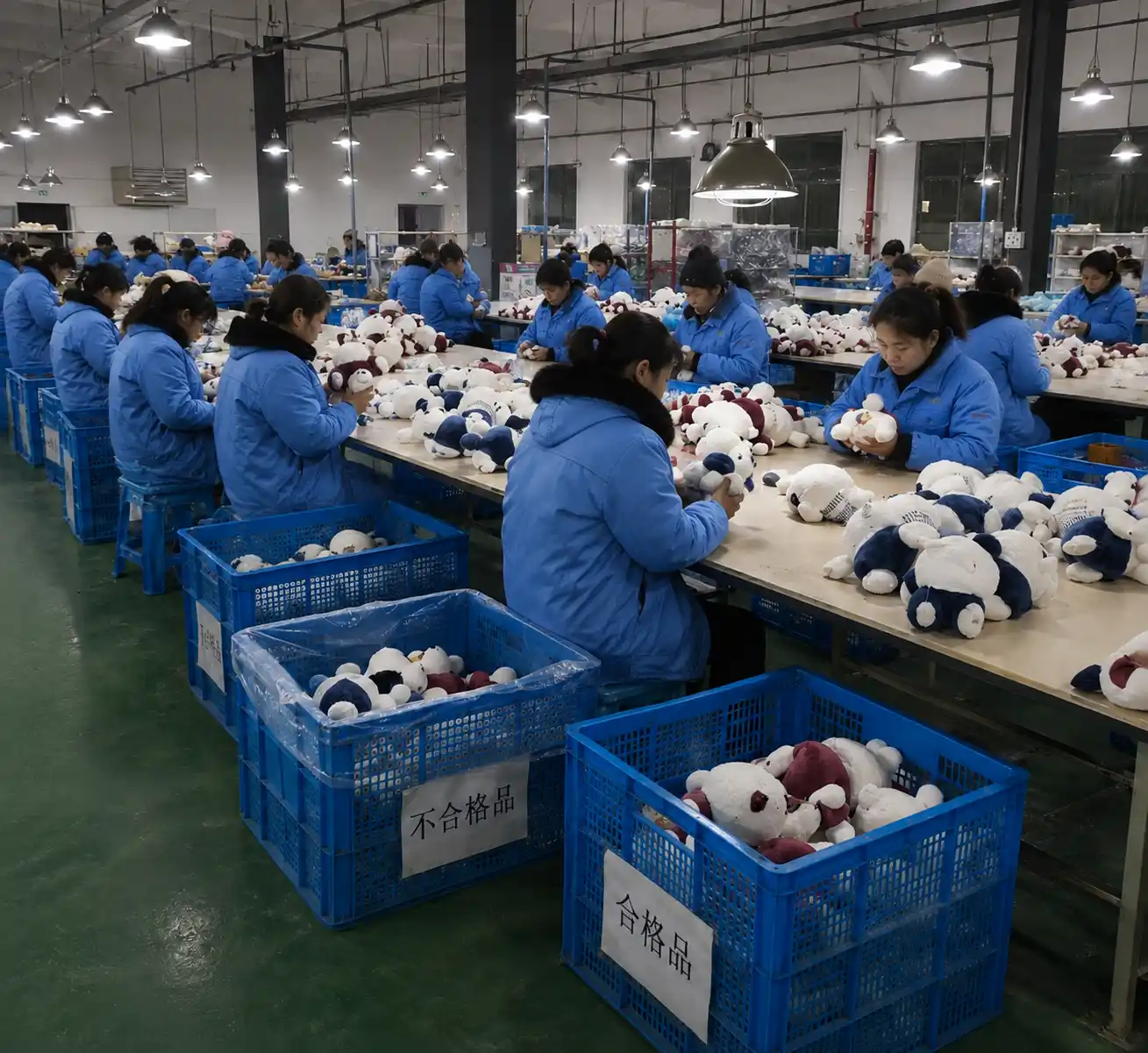
Plushies4u describes checks at several stages of its keychain production process: materials and hardware before production; shape, decoration and construction during production; and finished appearance, components and packaging before shipment. Buyers can make those checks more useful by confirming what the approved reference contains:
- Material specification: fabric type, color, pile direction, filling and hardware finish.
- Construction details: pattern, attachment point, embroidery or print position, clothing and accessories.
- Finished presentation: label position, hangtag, packaging artwork and packing method.
- Variant identification: the correct character, color and packaging for each design in a series.
If the order includes several characters or colorways, document the approved details for each one. Ask how quantity is allocated by design when requesting a quote; a stated overall MOQ does not by itself establish how multiple variants are counted.
For products intended or marketed as children’s toys in the US, define the age group early and address applicable testing and certification requirements for the finished design. Hardware, small components, seams and packaging may affect that review. The US Consumer Product Safety Commission’s toy safety guidance explains that applicable requirements depend on the toy and its intended audience; a component should not be described as “safe for children” solely because it is plastic.
What Affects the Cost of a Bulk Order?
A useful quote needs a defined product. Finished size, number of pattern pieces, fabric choices, embroidery or printing, miniature clothing, hardware, order quantity and packaging can all affect the work and materials required. A series with multiple designs may also need separate artwork review, samples or components.
When comparing quotations, keep the specification consistent. A simple short-pile character with a split ring and basic packing is a different product from a dressed mascot with mixed fabrics, detailed decoration, a custom clasp and retail box. Ask suppliers to identify what their price includes, including sample development, hardware, packaging and any testing arranged for the project.
Frequently Asked Questions
What is the best fabric for a custom plush keychain?
Choose the fabric around the character’s required look and smallest important detail. Shorter, more even surfaces often make miniature facial features easier to see; faux fur works well when fluffiness is part of the design. Approve the choice on a physical sample.
Is there a standard plush keychain size?
There is no single size that fits every design. Plushies4u lists 8–16 cm as a reference range for its custom plush keychains and develops other sizes according to the artwork and intended use. Confirm exactly how the finished plush will be measured.
Can a character illustration become a plush keychain?
Yes. The artwork must be interpreted as a three-dimensional, sewable form. Small features, proportions and accessories may need adjustment before the physical sample is approved.
Which hardware should I choose?
Begin with use: a split ring for a traditional keychain, a clasp for a movable bag charm, or a lightweight chain or loop for some mini charms. Then review the actual component and hanging position on the sample.
Can the keychain include a logo or miniature outfit?
Plushies4u offers options such as embroidery, printing, labels and character-specific clothing. Whether a particular logo or outfit will read clearly depends on its size, fabric and construction; assess it on the sample.
What is the most important sample check?
Check the entire product while it hangs. The character should face the intended direction, and the attachment should not make the plush twist, lean excessively or lose its shape. Review appearance, materials and packaging at the same time.
What is the MOQ?
Plushies4u lists an MOQ starting at 500 pieces for custom plush keychains. Provide the quantity for each design or colorway so the project team can confirm how the order will be planned.
How long does sampling and bulk production take?
Timing depends on the design, revisions, components, quantity and packaging. Share your required delivery date with the initial brief and request a project schedule after the specifications are reviewed.
Ready to Develop Your Custom Plush Keychain?
Send your artwork or reference sample, target plush dimensions, intended use, quantity by design, destination market, preferred fabric and hardware, branding requirements, packaging concept and delivery target. Plushies4u can use those details to review the design, develop a sample and prepare a quotation for custom plush keychain production.