Plush Toy Safety and Compliance: Global Standards & Supplier Checklist
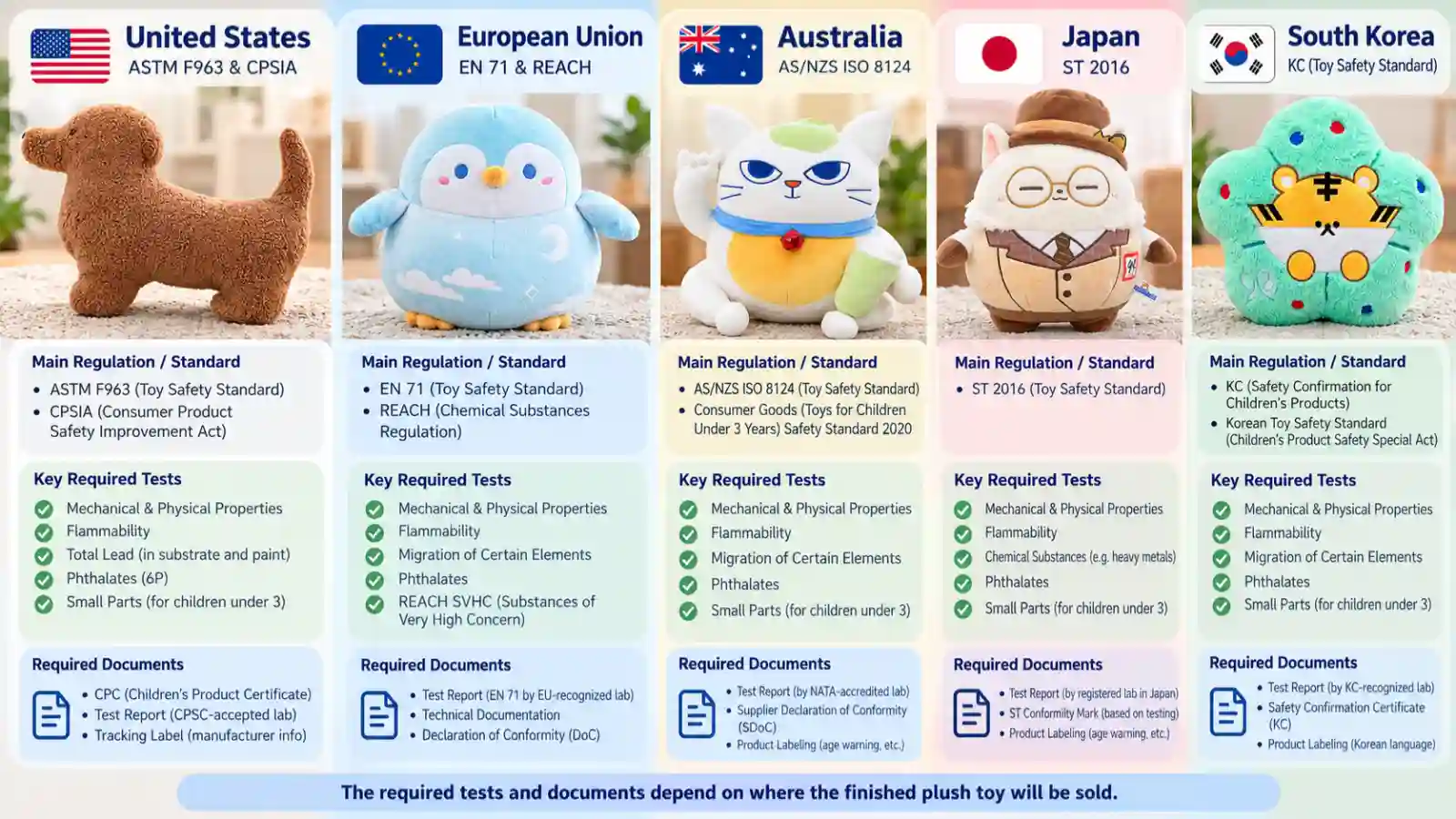
Plush toys must meet the safety requirements of the countries where they are sold. In the United States, these include applicable ASTM F963 and CPSIA rules. In the European Union, toy safety legislation, EN 71 standards, CE marking and chemical restrictions are central to compliance. Australia, Japan and South Korea have their own requirements. The appropriate testing and documentation depend on the toy’s intended age group, materials, construction and destination market.
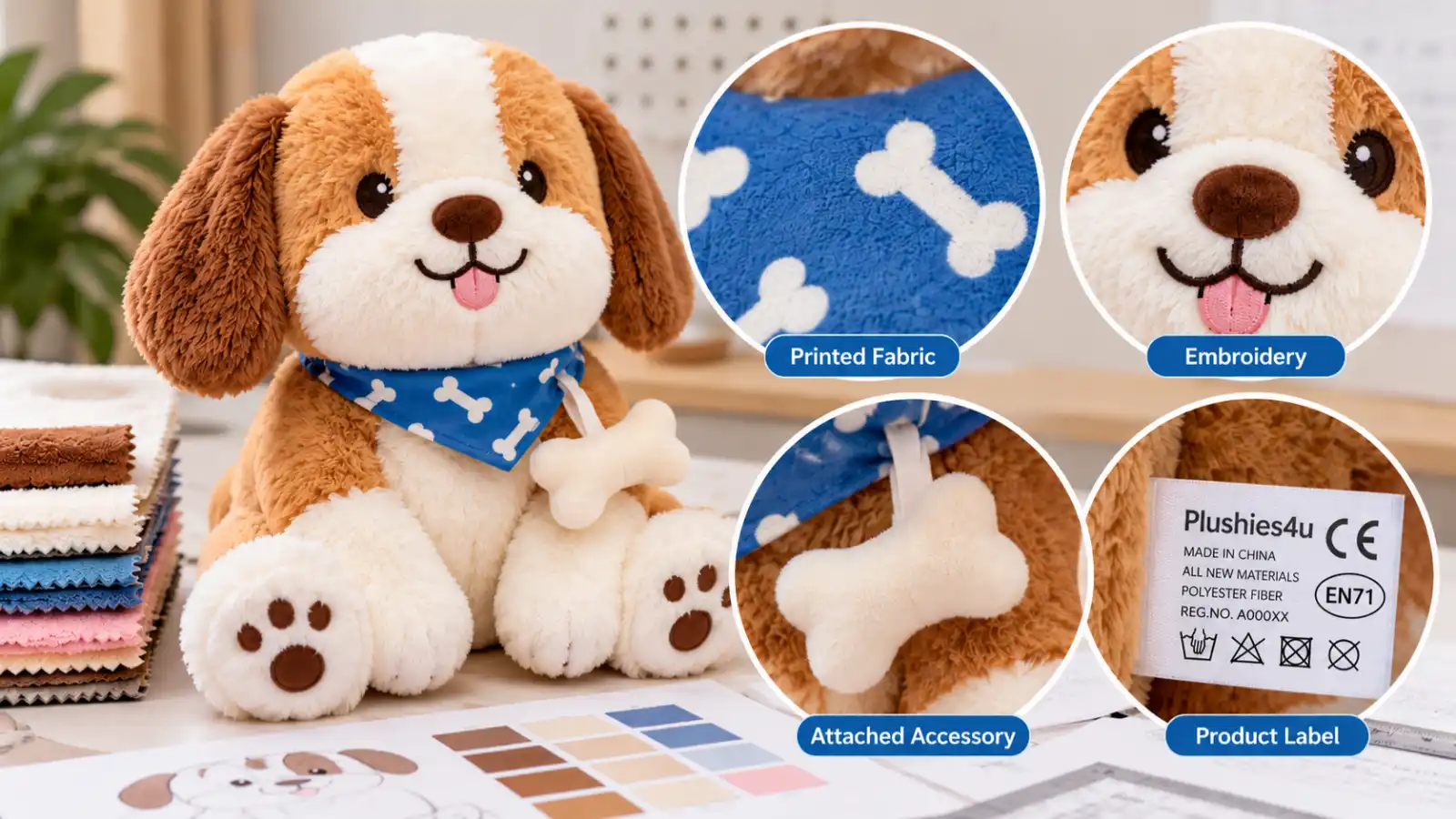
For custom plush toys, compliance decisions often begin long before laboratory testing. Choosing embroidered eyes instead of attached plastic eyes, changing a printed fabric or adding a sound module can affect the safety assessment.
A passing test report is also only part of the process. The approved sample, supporting documents and finished production must remain consistent.
This guide covers the main international requirements, practical safety considerations during custom plush development and a checklist for reviewing a manufacturer before mass production.
1. Plush Toy Safety Requirements by Market
Plush toy safety requirements vary by country. A test report prepared for the US market does not automatically establish compliance in the EU, Australia, Japan or South Korea.
The table below provides a starting point for identifying the relevant standards and documentation.
| Market | Main standards and requirements | Important documentation |
|---|---|---|
| United States | ASTM F963, applicable CPSIA and CPSC requirements | Test reports, Children’s Product Certificate (CPC), tracking information |
| European Union | Toy safety legislation, relevant EN 71 standards, CE marking, REACH | Safety assessment, technical documentation, EU Declaration of Conformity |
| Australia | Applicable mandatory toy safety standards, including requirements for toys intended for children up to 36 months | Relevant product testing evidence and labelling |
| Japan | Child PSC requirements for covered toys intended for children under three; voluntary ST scheme where relevant | Technical conformity evidence, required markings and age information |
| South Korea | KC children’s product safety requirements | Relevant Safety Confirmation documentation, testing and labels |
A product’s intended age group and design can change which requirements apply. Toys with batteries, magnets, removable accessories or unusual materials may also need additional assessments.
It is useful to establish a market-specific compliance plan before finalising the prototype.
2. US Toy Safety: ASTM F963, CPSIA and CPC
Children’s plush toys sold in the United States must meet applicable CPSC-enforced safety rules. These commonly involve relevant ASTM F963 requirements, CPSIA-related obligations, third-party testing and a Children’s Product Certificate (CPC).
The applicable provisions depend on the product’s construction, intended users and other characteristics.
ASTM F963 Testing
ASTM F963 is the main US toy safety standard incorporated into federal toy safety requirements. It addresses mechanical, physical, flammability and other hazards that may apply to children’s toys.
According to the US Consumer Product Safety Commission (CPSC), ASTM F963-23 applies to relevant children’s toys manufactured after April 20, 2024.
For a conventional plush toy, relevant assessments may include:
- Small parts and detachable components
- Sharp points and edges
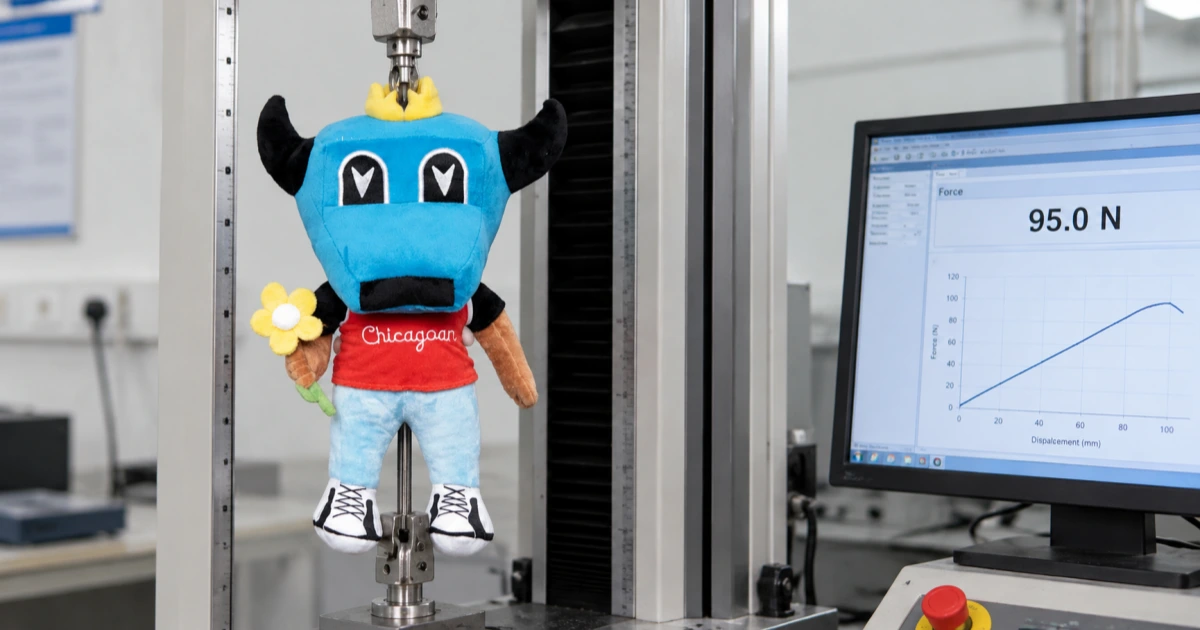
- Mechanical strength and physical construction
- Flammability
- Applicable chemical requirements
A plush toy with a plastic nose, removable outfit or battery-operated sound module may need a different test plan from a simple embroidered stuffed animal.
Not every ASTM F963 section applies to every product. A qualified laboratory should identify the applicable provisions from the actual design and intended age group.
CPSIA Testing Requirements
CPSIA testing concerns compliance with applicable US children’s product safety rules, including certain restrictions on lead and phthalates, as well as other relevant safety requirements.
For children’s toys subject to third-party testing rules, testing generally must be performed by a CPSC-accepted laboratory, subject to applicable exceptions and determinations.
The CPSC explains these obligations in its Toy Safety guidance.
Materials and components that may need closer review include printed decorations, plastic accessories, surface coatings and other accessible parts.
It is important to determine the relevant tests for the finished product rather than request a generic “CPSIA certificate.”
Children’s Product Certificate (CPC)
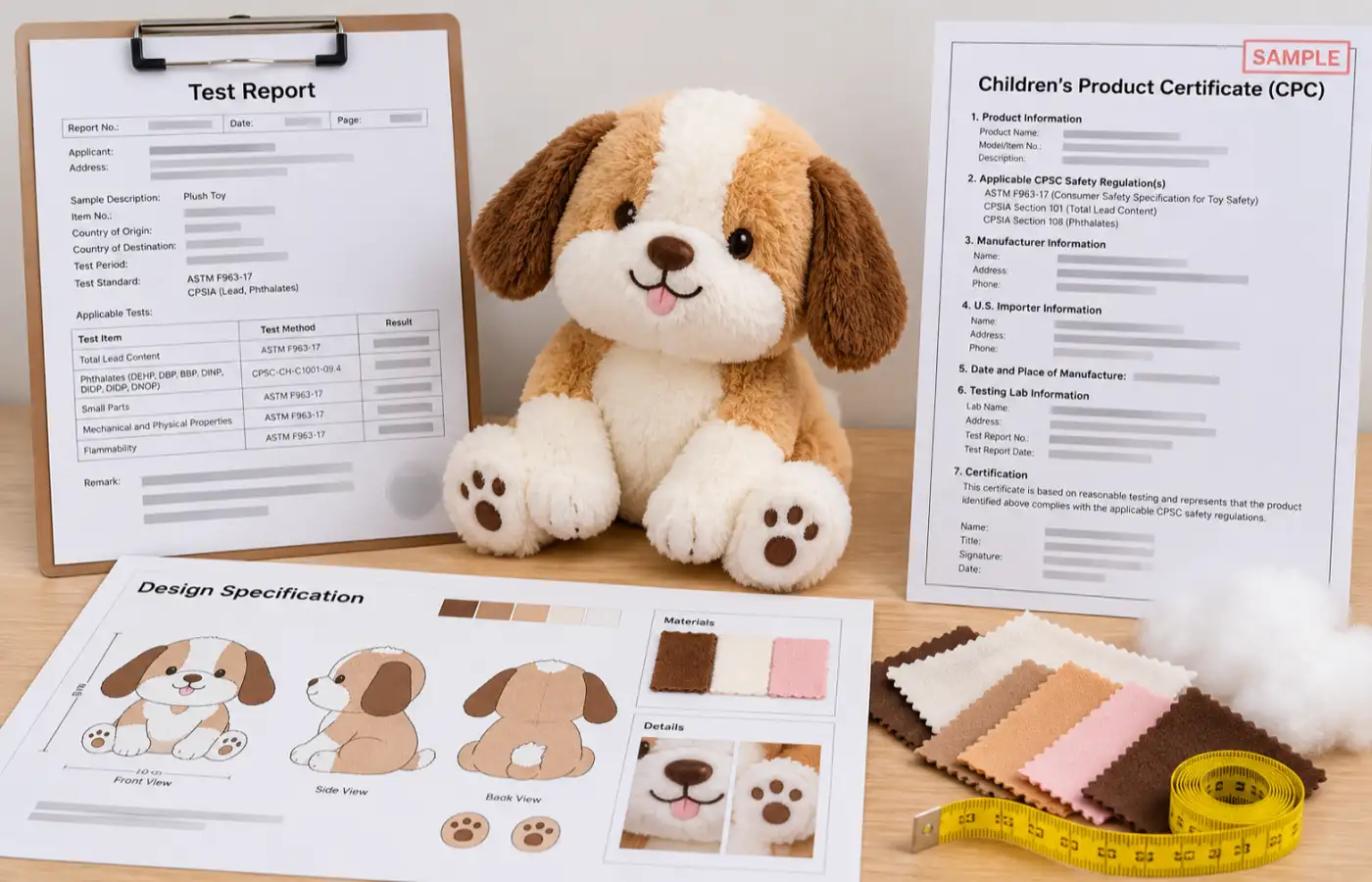
A Children’s Product Certificate is a written declaration that an applicable children’s product complies with the relevant CPSC-enforced rules. It is issued by the legally responsible US importer for an overseas-manufactured product, or the US domestic manufacturer for a domestically manufactured product.
A CPC is not a laboratory test report.
The test report provides supporting evidence. The CPC identifies the product, applicable requirements, responsible company, manufacturing and testing information, and other prescribed details.
The CPSC’s Children’s Product Certificate guide explains the required elements and provides examples.
For an imported custom plush toy, the documentation process should clearly establish who will arrange testing, provide supporting records and issue the CPC.
CPSC eFiling Requirements
Since July 8, 2026, most imported products subject to CPSC certification requirements have required electronic submission of certificate information. A later effective date, January 8, 2027, applies to certain products entered from a Foreign Trade Zone.
The CPSC eFiling guidance explains the implementation dates and relevant responsibilities.
Import planning therefore needs to account for both the underlying certification and the required electronic filing process.
3. EU Toy Safety: EN 71, CE Marking and REACH
Plush toys placed on the EU market must comply with applicable toy safety legislation and carry the required CE marking. Relevant EN 71 standards, chemical restrictions, technical documentation and conformity assessment procedures form part of the compliance process.
The European Commission’s Toy Safety guidance explains the framework for placing toys on the EU market.
EN 71 Testing
EN 71 is a series of European toy safety standards used to assess different hazards. For many conventional plush toys, EN 71-1, EN 71-2 and EN 71-3 are particularly relevant.
| Standard | What it covers |
|---|---|
| EN 71-1 | Mechanical and physical properties |
| EN 71-2 | Flammability |
| EN 71-3 | Migration of certain elements |
The applicable clauses and standard editions depend on the product and the regulatory framework in force.
For example, a plush character with a detachable keychain fitting has different mechanical considerations from a stuffed animal made entirely with embroidered details.
An EN 71 report should identify the tested product, applicable requirements and relevant results. Passing selected EN 71 tests does not automatically establish compliance with every EU requirement.
CE Marking for Toys
CE marking indicates that the manufacturer declares a toy conforms to applicable EU safety requirements. It does not mean that every toy must receive a certificate from an independent certification company.
The conformity assessment route depends on the product and the applicable conditions. The European Commission’s guidance on placing toys on the EU market explains the responsibilities of manufacturers, importers and distributors.
Supporting documentation may include a safety assessment, relevant test evidence, technical documentation and an EU Declaration of Conformity.
For a custom project, the product label, packaging information and relevant identification details should also be reviewed before artwork approval.
New EU Toy Safety Regulation
Regulation (EU) 2025/2509 introduces a new EU toy safety framework. Its main provisions apply from August 1, 2030, while certain provisions have applied since January 1, 2026.
The regulation will replace the existing Toy Safety Directive as part of the transition. It also introduces changes affecting chemical safety and digital product passports.
The official EUR-Lex summary explains the relevant dates and transitional arrangements.
For products developed now but intended for sale over several years, the planned market-placement date matters.
REACH Chemical Restrictions
REACH restricts certain substances used in products sold in the EU, including some substances relevant to textile toys and their accessories.
One example is the restriction on certain azo colourants that can release specified aromatic amines in regulated textile and leather articles.
The European Chemicals Agency’s Annex XVII, Entry 43 includes textile and leather toys within the relevant scope.
Not every azo dye is prohibited. Material composition, the restricted substance and the applicable conditions determine the requirement.
4. Toy Safety in Australia, Japan and South Korea
Australia, Japan and South Korea each have their own toy safety requirements. Compliance depends on product classification, intended age group, design and the relevant national rules.
These requirements should be checked separately from US and EU testing.
Australia: Mandatory Toy Safety Standards
Australia’s mandatory safety standards include requirements for toys intended for children up to and including 36 months of age.
The Consumer Goods (Toys for Children up to and including 36 Months of Age) Safety Standard 2023 addresses relevant physical and mechanical hazards.
Under the Australian Competition and Consumer Commission’s guidance, applicable toys must comply with specified requirements drawn from one of several recognised standards, including AS/NZS ISO 8124.1:2023, ISO 8124-1:2022, EN 71-1:2014+A1:2018 or ASTM F963-17. The mandatory standard also includes a specified requirement relating to electric toy safety.
These are not instructions to test every toy to all the listed standards in full.
For plush toys intended for young children, small detachable components, attachment security and accessible materials deserve particular attention.
Japan: Child PSC and Voluntary ST Standards
Japan requires covered toys intended for children under three to meet the Child PSC regulatory framework. The voluntary ST system is separate and does not replace statutory obligations.
The new Child PSC requirements took effect on December 25, 2025.
According to Japan’s Ministry of Economy, Trade and Industry (METI), covered infant toys are subject to technical requirements, specified marking and age-related warnings. Transitional treatment depends on relevant manufacturing or import dates.
A plush toy intended for children under three should therefore have its classification and labelling requirements confirmed before production.
South Korea: KC Safety Confirmation
Toys covered by South Korea’s children’s product safety framework generally follow the applicable KC Safety Confirmation procedure.
Depending on the product, this can involve testing by a designated body, safety-confirmation reporting and prescribed labelling.
The Korea Testing & Research Institute (KTR) lists toys within its Safety Confirmation coverage.
A plush toy with electronic features or unusual accessories may need a different assessment from a basic non-electronic stuffed animal.
The responsible Korean business operator should confirm the relevant process and documentation.
5. Key Safety Checks for Custom Plush Toys
The most important safety checks for a custom plush toy concern its construction, attached components, materials, intended age group and any functional features. These details should be reviewed while the pattern and sample are still being developed.
A visual inspection cannot replace required laboratory testing, but design decisions can reduce avoidable problems before formal assessment.
Plastic Eyes vs. Embroidered Eyes
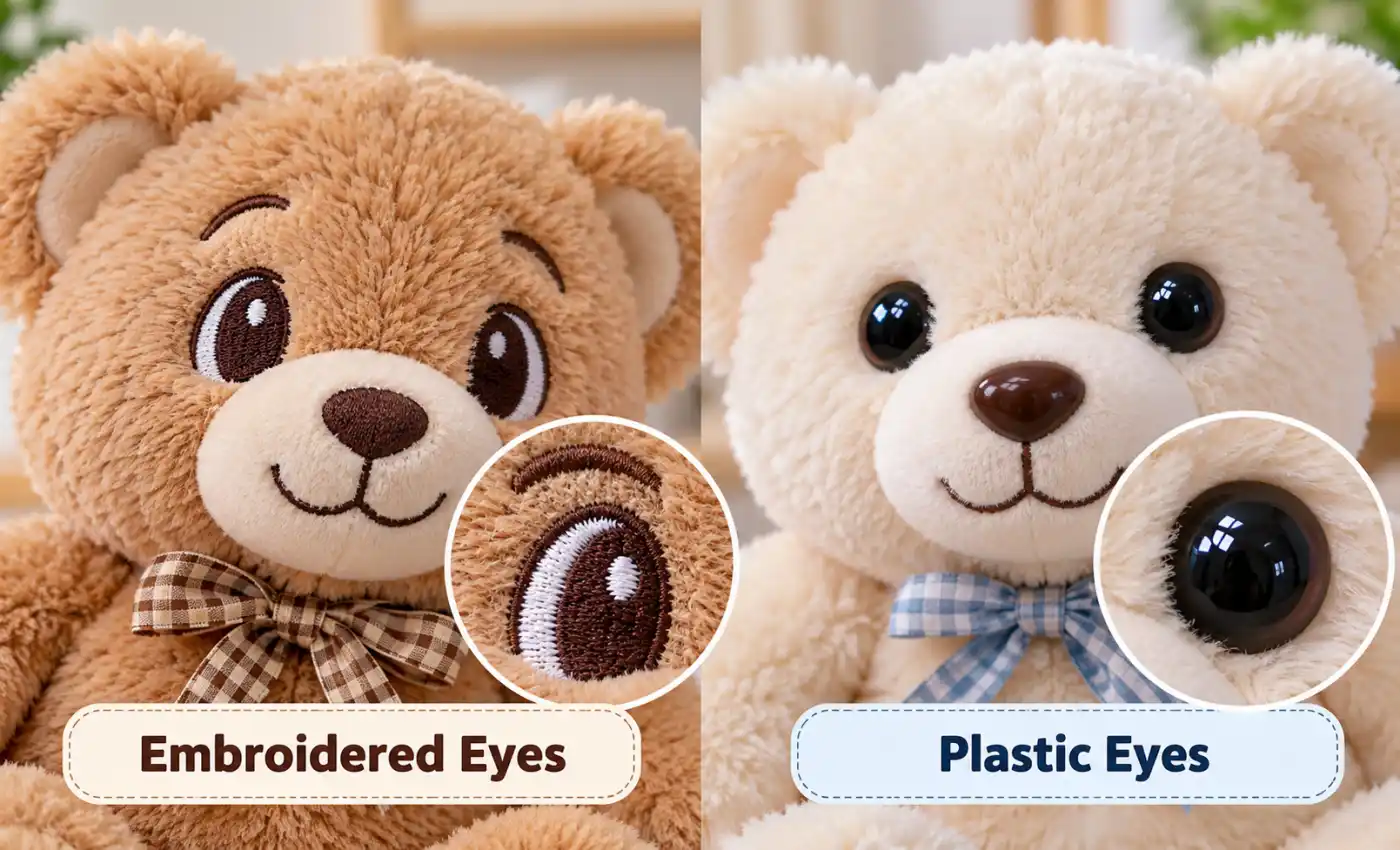
Plastic eyes and embroidered eyes present different safety considerations. Attached plastic eyes are separate components that may need mechanical assessment, particularly for toys intended for young children. Embroidered eyes remove that separate attachment but do not eliminate other product safety requirements.
During prototype development, the choice affects appearance as well as construction.
An embroidered eye may require adjustments to thread colour, stitch density and placement. A plastic eye requires consideration of the attachment system, backing, surrounding fabric and intended age group.
Neither option should be described as automatically compliant without evaluating the finished toy.
Seam Construction and Stuffing
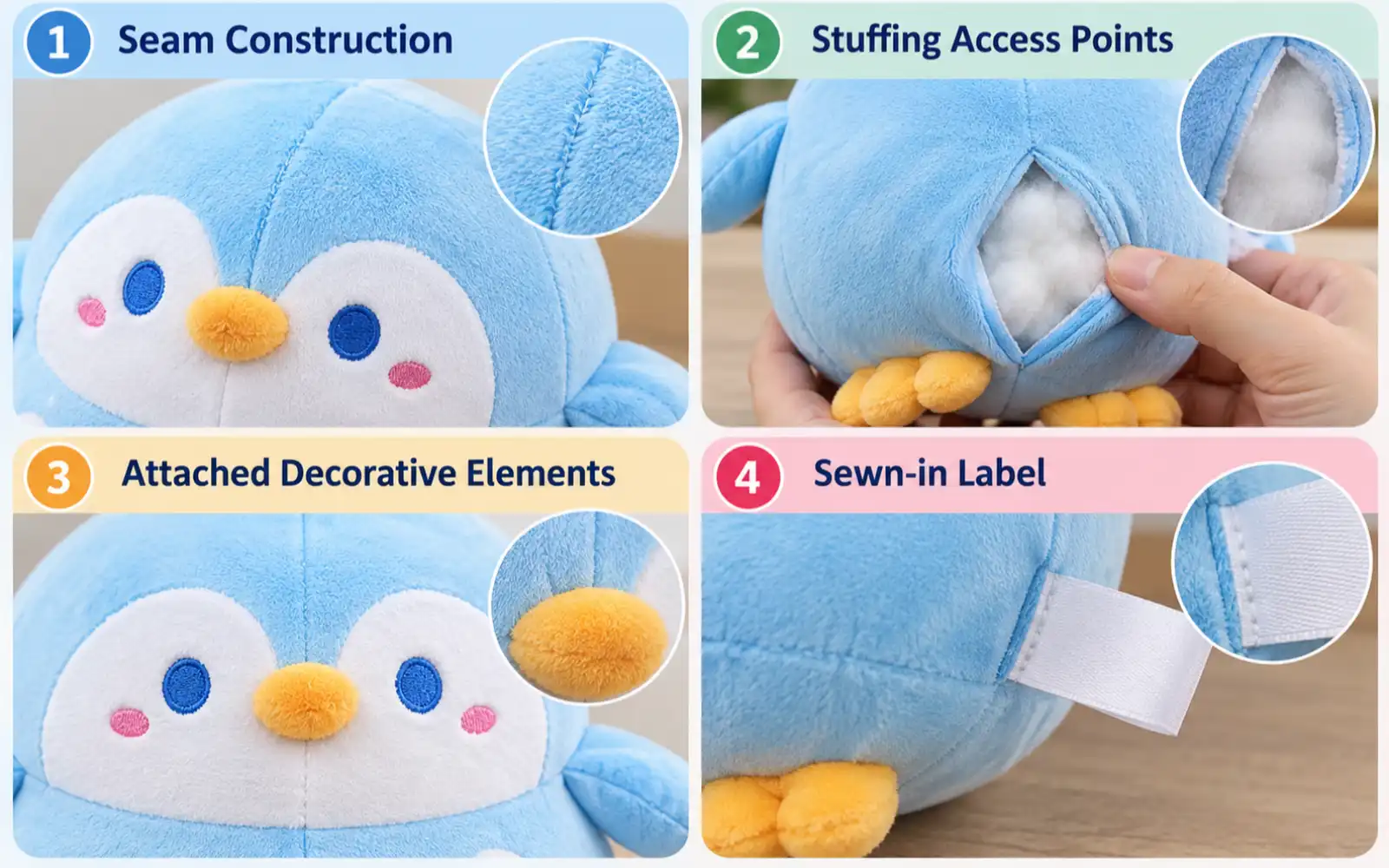
Plush toy seams and filling must be assessed against the applicable safety requirements for the product. Weak seams or openings can make stuffing accessible.
Areas requiring attention include curved seams, narrow limbs, sewn-on ears, attachment points and closures.
The type and amount of stuffing can also affect a plush toy’s shape, firmness and seam tension.
For more information about material selection, see our guide to stuffing materials for custom plush toys.
Ribbons, Cords and Removable Accessories
Ribbons, cords, removable clothing and decorative accessories may introduce mechanical or entanglement hazards. Their suitability depends on the design and intended age group.
A removable scarf or decorative bow may look simple in an artwork file but require additional review once its length, attachment and construction are finalised.
Accessories should be included in the approved sample and relevant safety assessment.
Sound Modules and Electronic Components
Electronic plush toys may require additional safety assessments beyond those for conventional stuffed animals.
Battery compartments, sound modules, switches, internal wiring and other features should be considered alongside the toy’s fabric construction.
A non-electronic plush sample should not be used as the sole basis for assuming an electronic version meets the same requirements.
Labels, Hangtags and Tracking Information
Product labels may need to carry identification, warnings, age-related information and other market-specific details. A decorative woven brand label does not automatically meet these legal requirements.
Labels should be reviewed before the final artwork and packaging are approved.
Position, attachment method and available space matter, particularly when a small plush toy needs both branding and required product information.
6. Chemical Testing and Material Restrictions
Chemical testing for plush toys depends on the materials used and the restrictions applicable in the destination market. Fabrics, dyes, printed panels, surface coatings and plastic accessories may require different assessments.
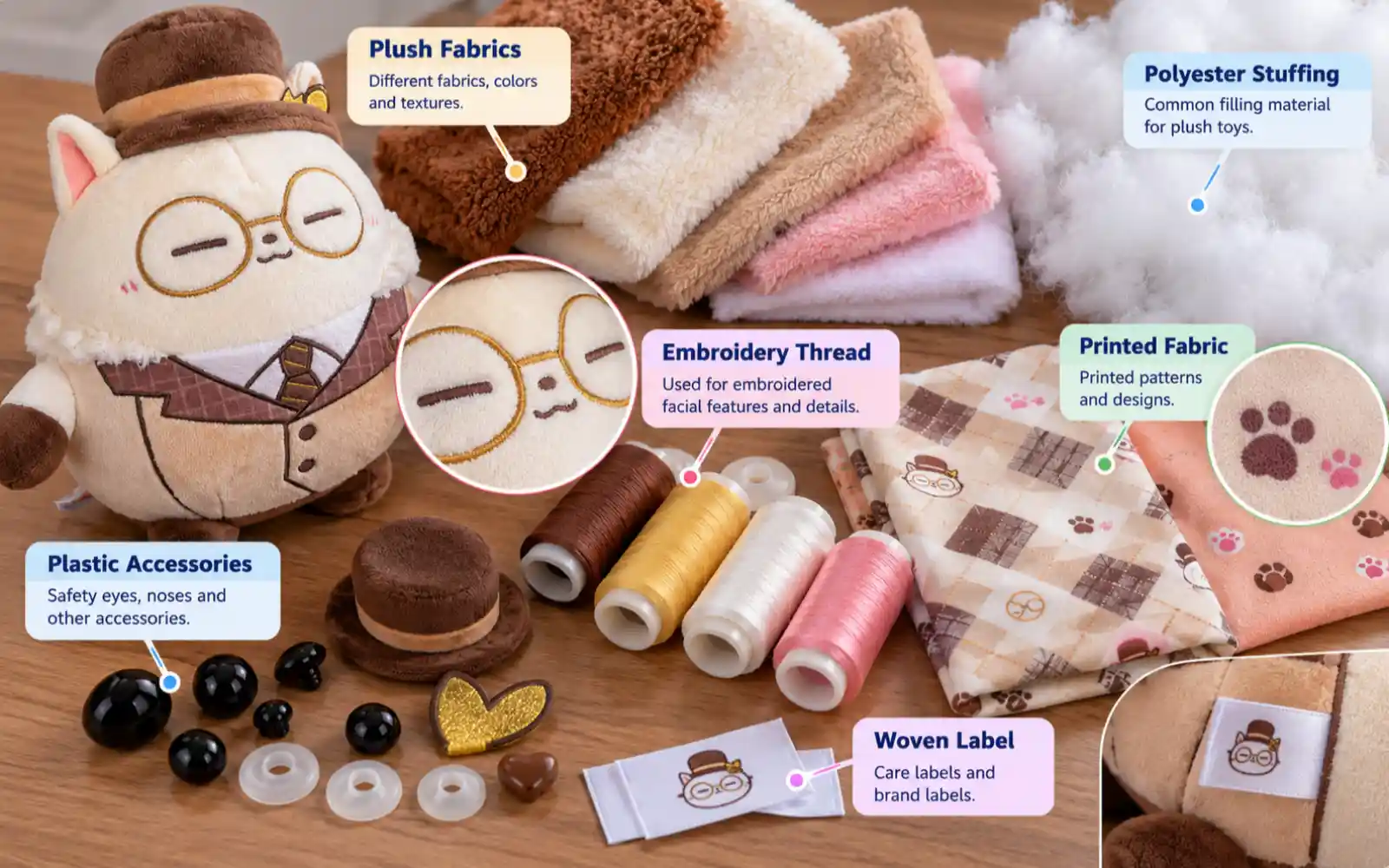
A useful first step is to document the materials used in the approved sample.
Azo Dyes in Plush Fabrics
Azo dye testing may be relevant to dyed textile components where applicable chemical restrictions address certain colourants and aromatic amines.
An “azo-free” claim is not a substitute for understanding which substances are restricted and which materials are being assessed.
Lead and Phthalates
Lead and phthalate requirements may apply to relevant children’s product materials and components.
For custom plush toys, certain printed decorations, surface coatings and plastic accessories may require closer review, depending on the market and applicable rules.
Testing should follow the relevant regulatory scope rather than a generic material checklist.
Material Changes After Testing
Replacing an approved fabric, plastic accessory, printed panel or coating can affect whether earlier test evidence remains suitable.
Two fabrics may look nearly identical but differ in composition, dyeing or finishing.
For example, changing a plush character from an embroidered mouth to a printed mouth introduces a different material process that may require reassessment.
Similarly, replacing an approved plastic eye with another component should not be treated as a purely cosmetic change.
A material specification and a clear record of approved changes help connect the tested sample with the finished production.
7. How to Verify Toy Safety Test Reports
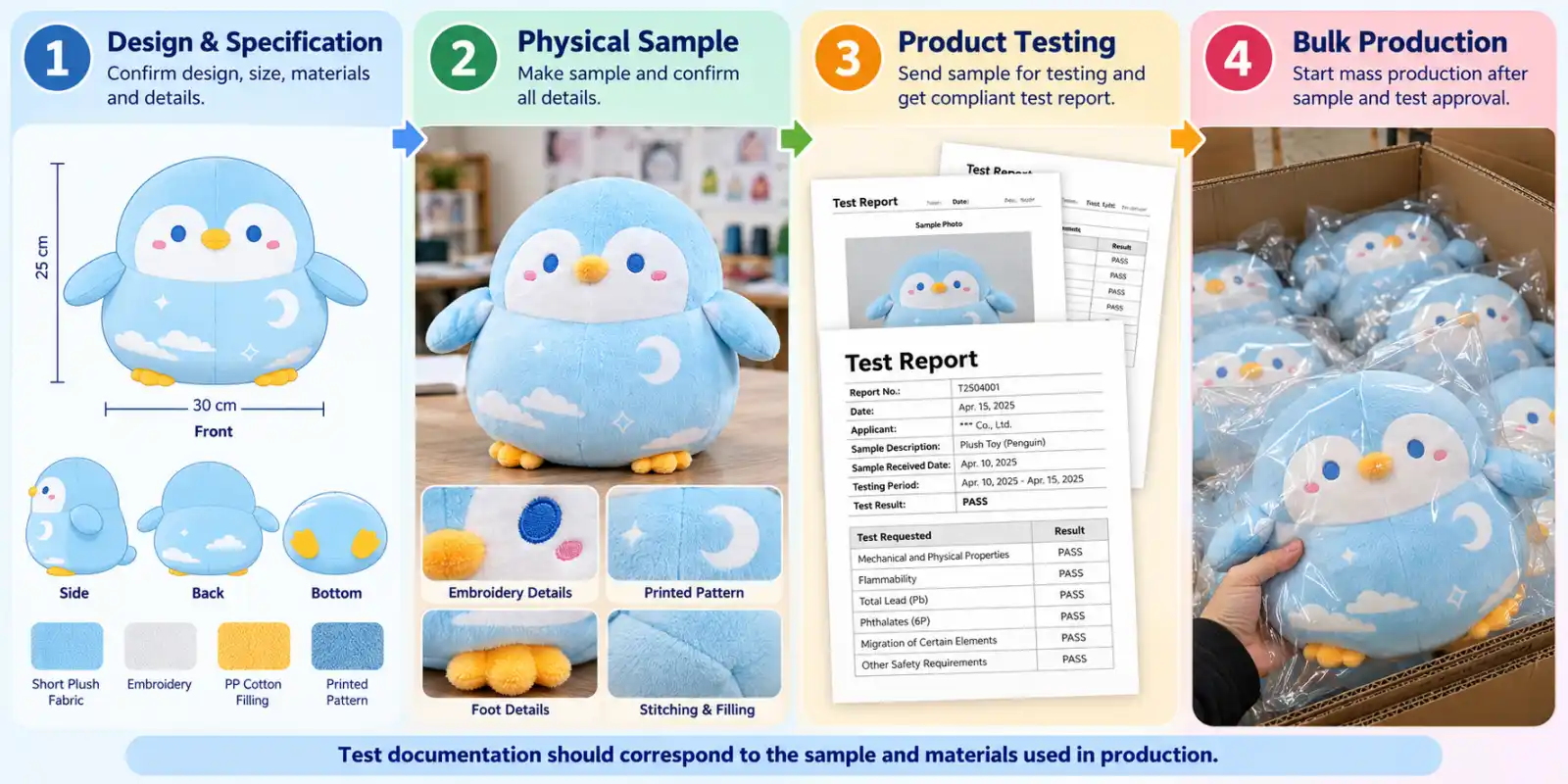
A toy safety test report should identify the product tested, applicable requirements, testing laboratory and results. It should also be possible to relate the tested sample to the approved product and its production materials.
A report for a different toy, construction or material configuration should not be assumed to cover a new custom plush project.
Check the Product Identification
Confirm that the report covers the correct plush toy model, components and relevant variations.
Product photographs, model references and sample descriptions can help establish the connection.
Check the Standards and Laboratory
The report should identify the applicable standards or regulatory requirements and the testing performed.
Where relevant law requires testing by an accepted or designated laboratory, its status and the scope of its acceptance should be confirmed.
Check the Sample and Testing Dates
Compare the tested sample with the approved production sample.
If fabric, accessories, coatings or construction changed after testing, assess whether existing evidence remains appropriate.
Keep Production Consistent with the Approved Sample
Compliance evidence is most useful when the tested sample and manufactured product remain aligned.
The relationship should be traceable:
Approved design → Representative test sample → Relevant test reports → Finished production
A product development process that records sample revisions and material choices can make this review easier.
For a closer look at the physical manufacturing stages, read How Plush Toys Are Made.
8. Plush Toy Supplier Compliance Checklist
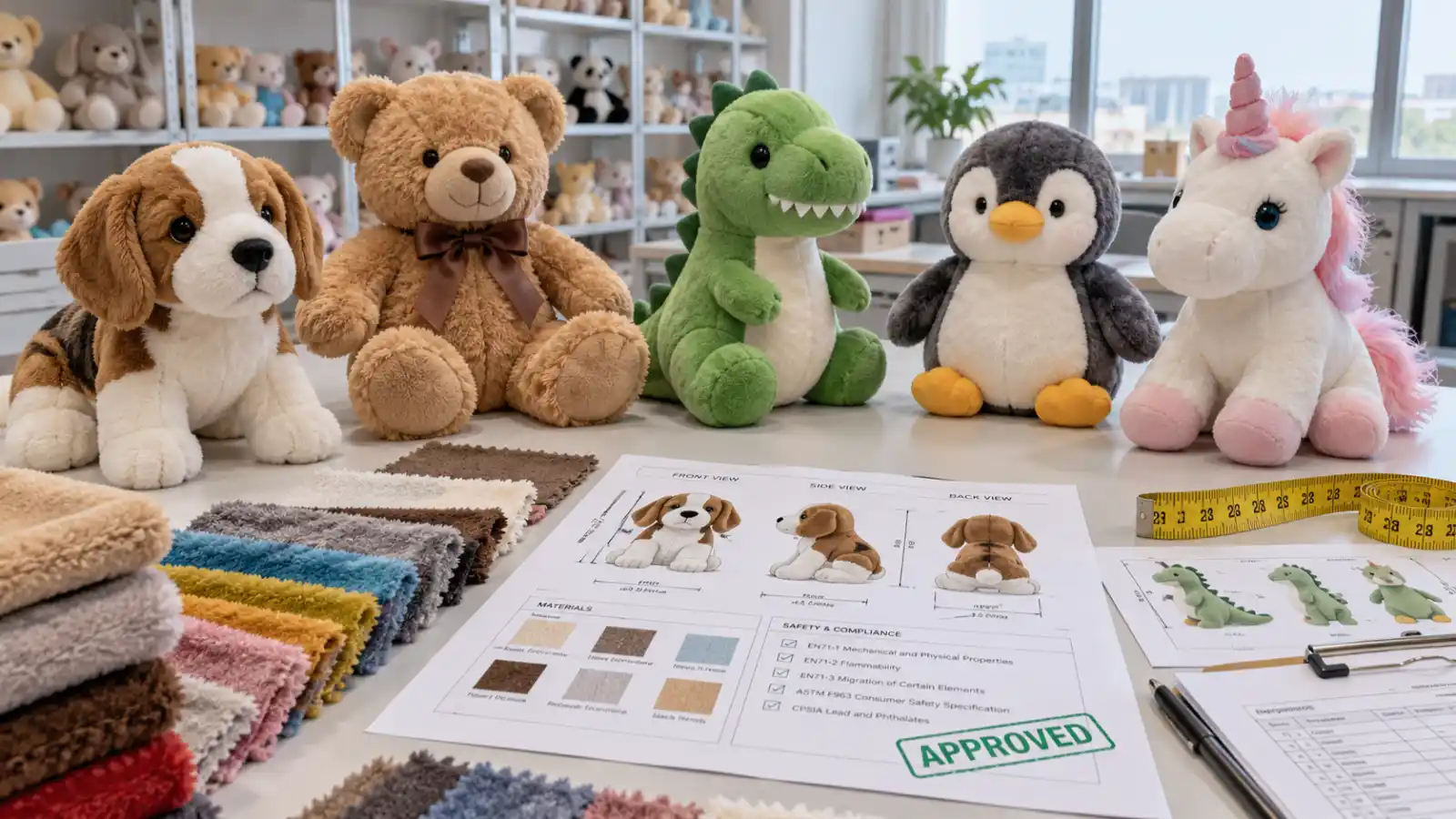
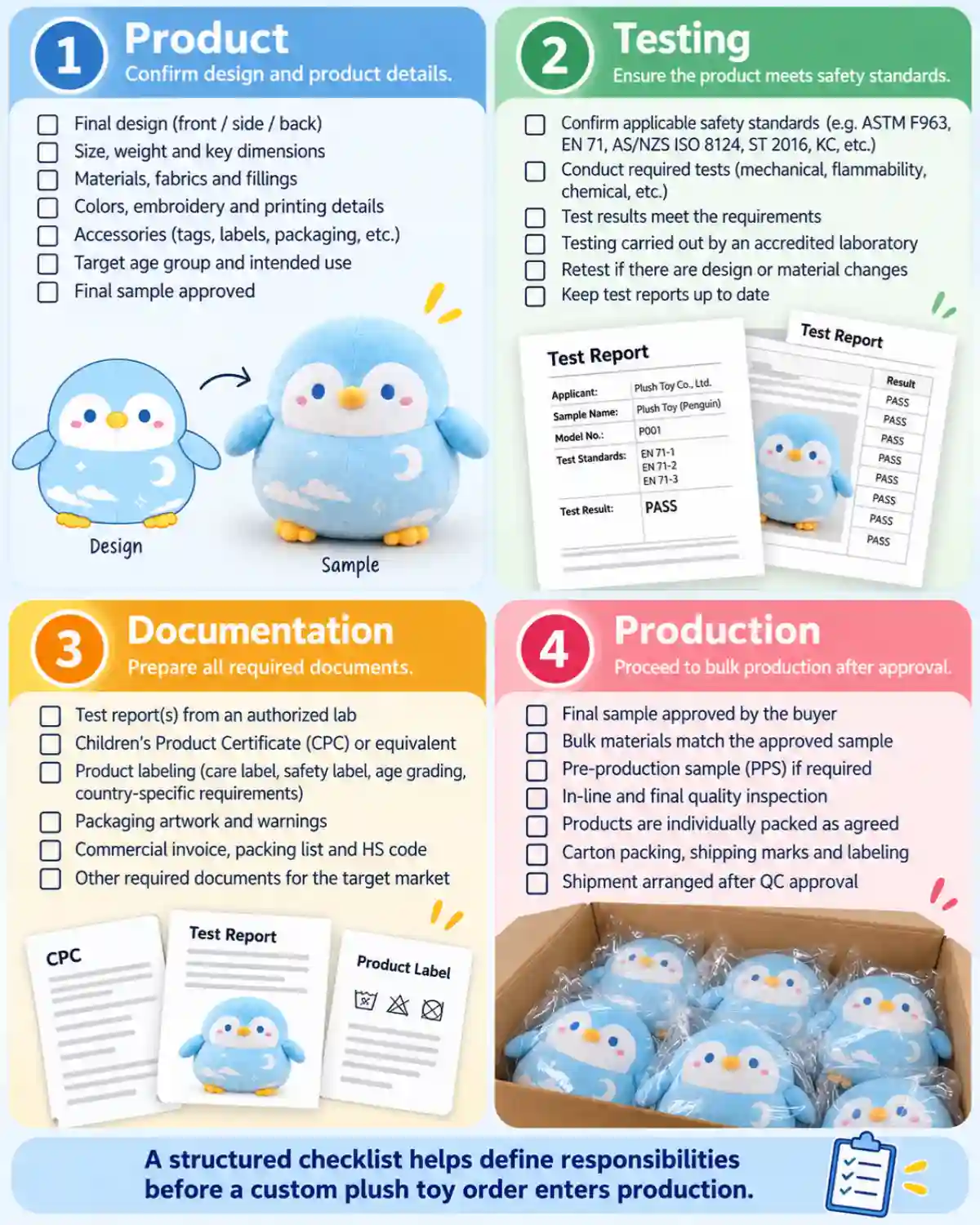
A plush toy supplier compliance checklist should cover the product specification, target market, testing plan, materials, reports, labels, certification responsibilities and production consistency.
The following checklist can be used before approving mass production.
| Checkpoint | What to verify |
|---|---|
| Destination market | Where the finished plush toy will be sold |
| Intended age group | Age classification used for product design and assessment |
| Final design | Approved dimensions, artwork, accessories and functions |
| Materials | Outer fabrics, stuffing, printed components, coatings and plastics |
| Applicable standards | Relevant requirements for the destination market |
| Testing plan | Required assessments for the finished design |
| Laboratory | Appropriate qualifications or regulatory acceptance |
| Test reports | Product identification, scope, results and relevant dates |
| Certificates and declarations | The documents required and the party responsible for issuing them |
| Labels and warnings | Applicable information on the toy and packaging |
| Sample approval | Approved sample matches the tested configuration |
| Material changes | Substitutions and modifications reviewed before production |
| Quality inspection | Agreed checks during and before completion of production |
| Shipment documents | Required records are available to the responsible parties |
Not every item requires the same document in every country. The checklist should be adjusted to the product and its intended market.
Questions to Clarify Before Production
A manufacturing agreement should establish how testing, documentation and production changes will be handled.
Useful questions include:
- Which safety requirements apply to the final design?
- Who will select and coordinate with the testing laboratory?
- Which sample and material variations will the tests cover?
- Who is responsible for the relevant certificate or declaration?
- What happens if a sample fails a required test?
- Who approves material substitutions during production?
- Which inspection and compliance documents must be available before shipment?
Agreeing on these matters early helps avoid disputes and unnecessary rework.
9. Common Plush Toy Compliance Mistakes
The most common compliance mistakes involve using unsuitable test reports, confusing certificates with testing evidence, changing materials without reassessment and overlooking product labels.
Assuming One Test Report Covers Every Market
A report prepared for the United States does not automatically satisfy EU, Australian, Japanese or Korean requirements.
Review the intended markets and applicable rules before deciding whether additional evidence is needed.
Treating a CPC as a Laboratory Certificate
A US CPC is issued by the responsible importer or domestic manufacturer and supported by appropriate compliance evidence.
A laboratory report is not a replacement for that legal responsibility.
Changing Materials After Testing
Replacing a fabric, print, coating or plastic attachment can change the finished product.
A new material should be reviewed for its effect on the existing safety assessment before production proceeds.
Ignoring Labelling Until Packaging Approval
Warnings, tracking information and required identification may affect product labels and packaging layouts.
Reviewing them early can prevent artwork revisions after production has begun.
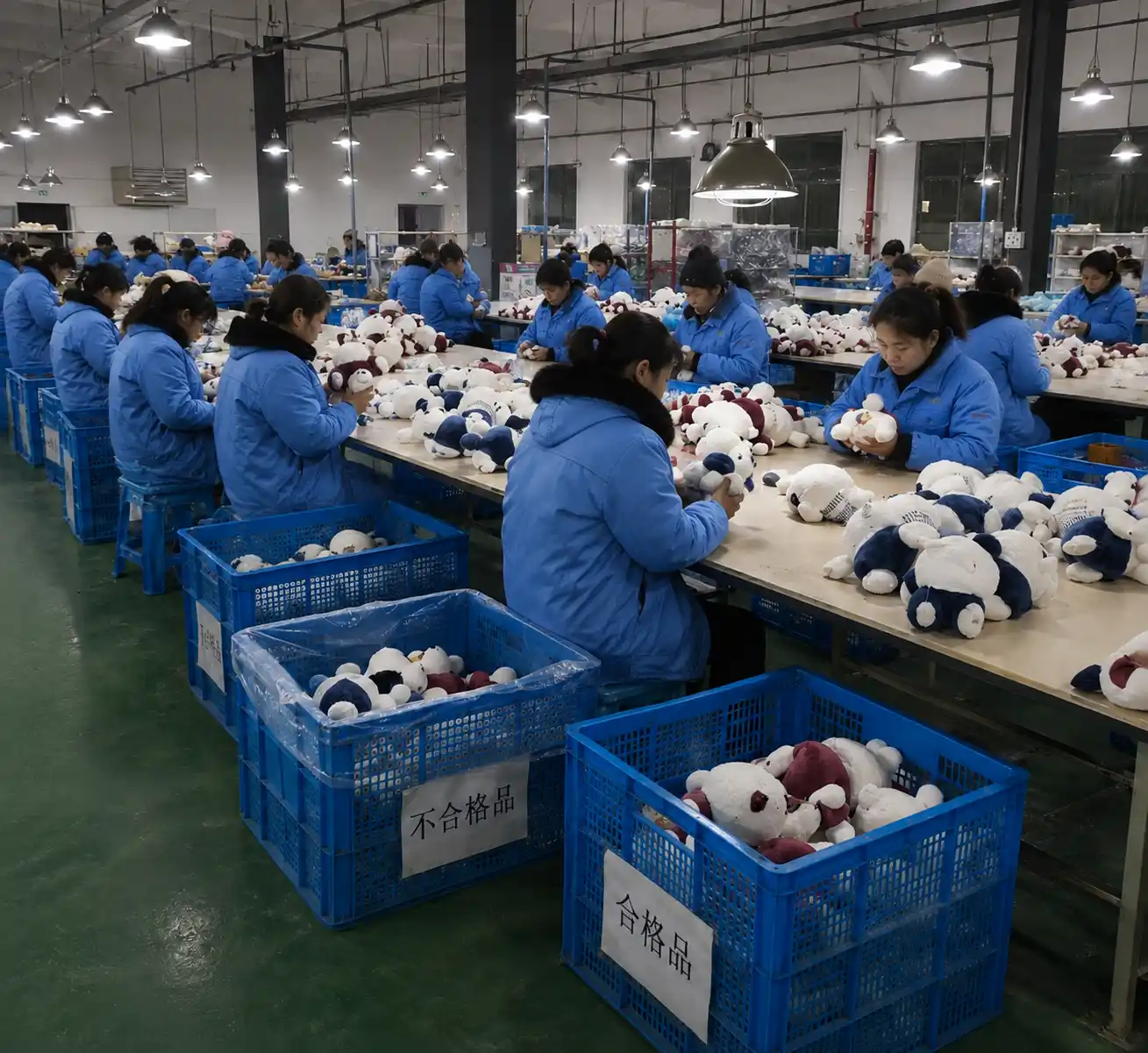
Assuming Factory Inspection Replaces Laboratory Testing
Routine factory inspection checks workmanship and product consistency. It does not automatically replace testing required under applicable safety legislation.
Both activities may be necessary, but they have different purposes.
10. Frequently Asked Questions
What is ASTM F963 testing for plush toys?
ASTM F963 testing evaluates applicable US toy safety requirements, including relevant mechanical, physical, flammability and chemical hazards. The specific tests depend on the finished plush toy.
What is CPSIA testing?
CPSIA testing refers to testing used to demonstrate compliance with relevant US children’s product safety requirements, including applicable material restrictions and other CPSC-enforced rules.
What is a Children’s Product Certificate?
A Children’s Product Certificate is a written declaration that an applicable children’s product complies with relevant CPSC-enforced safety rules. For overseas-manufactured products imported into the US, the importer generally issues the CPC.
What is EN 71 testing?
EN 71 testing assesses applicable toy safety hazards using European standards. Relevant parts for plush toys commonly include mechanical and physical properties, flammability and migration of certain elements.
What does CE marking mean on toys?
CE marking indicates that the manufacturer declares the toy meets applicable EU requirements. It must be supported by an appropriate conformity assessment and relevant technical documentation.
Do all plush toys need the same safety tests?
No. Testing depends on the product’s intended age group, design, materials, functionality and destination market.
Do different fabric colours require separate testing?
Not always. Whether different colours require additional testing depends on the materials, applicable rules and accepted testing approach. The laboratory should determine the appropriate scope.
Can one test report cover several plush toy designs?
It may cover relevant products or variations where the applicable rules and supporting evidence permit, but it should not be assumed to cover unrelated designs automatically.
Can plush toys use embroidered eyes instead of plastic eyes?
Yes. Embroidered eyes are a common design option and remove the separate attached eye component. However, the finished toy still needs an appropriate safety assessment.
Can a manufacturer help coordinate toy safety testing?
A manufacturer may support testing by preparing specifications and representative samples, supplying material information or coordinating with a laboratory where that service is available. Legal certification responsibilities must still be assigned correctly.
11. Planning a Compliant Custom Plush Toy Order
A compliant custom plush toy project starts with the intended sales market, age classification and approved design. Testing, documentation and production requirements should be established before the final sample is released for mass manufacturing.
A practical sequence is:
- Define the destination market and intended age group.
- Finalise the plush toy’s dimensions, materials and accessories.
- Identify applicable testing and documentation requirements.
- Develop and approve a representative sample.
- Arrange suitable safety testing and review the results.
- Confirm product labels and responsible-party details.
- Review any changes to approved materials or construction.
- Complete the agreed production inspections and document handover.
For additional guidance on the purchasing process, see How to Order Custom Plush Toys in Bulk.
Discuss Your Custom Plush Toy Project
Plushies4u manufactures custom plush products based on customer artwork, character designs and project specifications.
When requesting a quotation, include the intended destination market, age group, design references, preferred materials, dimensions and estimated quantity. If your importer, retailer or compliance adviser has specified particular testing or labelling requirements, include those details as well.
This information helps clarify the sampling and manufacturing requirements before the order proceeds.
Note: This guide is for general information only. Toy safety requirements vary by product and destination market. Please confirm the applicable requirements with qualified testing professionals or relevant authorities before placing products on the market.